

A warehouse safety checklist is a structured inspection tool used to identify hazards, verify compliance, and prevent workplace injuries before they occur. Moreover, when used consistently, it is one of the most practical ways to protect workers, reduce liability, and maintain operational continuity.
Table of Contents
- Why Warehouse Safety Demands Structured Audits
- Core Areas Every Warehouse Safety Checklist Must Cover
- Loading Dock and Forklift Safety in Your Warehouse Safety Checklist
- Technology’s Role in Warehouse Safety Checklists
- Things to Know
Key Takeaways
- U.S. warehouses recorded an injury rate of 4.8 cases per 100 full-time employees in 2024, according to Bureau of Labor Statistics data cited by Voxel AI.
- A warehouse safety checklist must cover aisles, racking, forklifts, loading docks, emergency systems, and PPE at minimum.
- Loading docks account for 25% of all warehouse accidents, making dock protocols a non-negotiable audit category.
- Technology, including computer vision AI, has helped some facilities cut injuries by 77% within 12 months of deployment.
- Safety programs are most effective when paired with real-time data, not just periodic walkthroughs.
Why Warehouse Safety Demands Structured Audits
The numbers make the case plainly. The transportation and warehousing sector recorded 232,000 injury cases in 2024, according to Voxel AI’s logistics safety report. Despite advances in automation, human workers still operate in high-risk environments where forklift traffic, racking systems, and heavy loads converge daily.
Additionally, a 2025 survey found that 72% of warehouse associates expressed concern about safety on increasingly busy floors. Furthermore, 70% specifically worried about injuries, according to Zebra Technologies findings cited by Voxel AI.
That level of concern from frontline workers signals a critical gap. Written policies alone are not enough. A repeatable, documented checklist creates accountability and gives supervisors a measurable baseline.
OSHA’s General Industry Standards (29 CFR 1910) and the Hazard Communication Standard apply directly to warehousing. However, this article does not constitute legal compliance advice. Facility managers should consult OSHA’s official resources or a qualified safety officer to ensure their specific operation meets all applicable requirements.

Core Areas Every Warehouse Safety Checklist Must Cover
A thorough inspection covers physical infrastructure, operational practices, and emergency readiness. Below is a breakdown of the essential categories for your warehouse safety checklist:
Aisle and Floor Safety in Your Warehouse Safety Checklist
- Aisle widths meet OSHA minimums (at least 28 inches for non-vehicle aisles; wider for forklift lanes).
- Floor surfaces are clean, dry, and free of debris or spills.
- Floor markings are visible and clearly delineate pedestrian zones from forklift paths.
- No materials are stored in aisles or blocking emergency exits.
Racking and Shelving Integrity
- All racking is anchored to the floor per manufacturer specifications.
- No visible damage to uprights, beams, or connectors exists.
- Load capacity labels are present and current.
- Regular rack inspections are documented, per guidance from organizations like Damotech.
Personal Protective Equipment (PPE)
- PPE appropriate to each task is available, maintained, and worn correctly.
- Steel-toed footwear, high-visibility vests, and hard hats are accessible in required zones.
- PPE inspection logs are current.
Emergency Systems
- Fire extinguishers are charged, accessible, and inspected within the past 12 months.
- Sprinkler systems are unobstructed (maintain 18-inch clearance below sprinkler heads, per NFPA 13).
- Exit signage is illuminated and unblocked.
- Emergency evacuation routes are posted and understood by all staff.
Hazardous Materials
- All chemical containers are labeled per OSHA HazCom requirements.
- Safety Data Sheets (SDS) are accessible to all employees.
- Flammable materials are stored in approved cabinets.
Understanding your facility’s operational context shapes which checklist items carry the most weight. In addition, learning what is a distribution center versus a traditional warehouse can clarify whether throughput velocity and product handling differ significantly and how that affects your risk profile.
Loading Dock and Forklift Safety in Your Warehouse Safety Checklist
Loading docks are consistently among the most hazardous areas in any facility. According to Voxel AI’s safety statistics, 25% of all warehouse accidents occur at loading docks. Furthermore, forklift-related incidents range between 35,000 and 62,000 annually across the U.S., making powered industrial truck safety a central audit focus.
Loading Dock Checklist Items
- Dock plates and levelers are inspected daily before use.
- Wheel chocks or restraint systems are in place before any trailer is loaded or unloaded.
- Dock lighting is functional and covers the full trailer interior.
- Pedestrian barriers separate workers from vehicle traffic at dock entrances.
Forklift Safety Checklist Items
- Pre-shift forklift inspections are completed and logged by the operator.
- Operators hold current certification per OSHA 29 CFR 1910.178(l).
- Speed limits are posted and enforced throughout the facility.
- Blind corners have mirrors installed.
- Forklifts are never used to elevate workers without an approved work platform.
Knowing the distinction between warehouse vs distribution center differences clarifies forklift traffic patterns and dock utilization rates. Both factors affect where your highest-risk zones actually are.
Technology’s Role in Warehouse Safety Checklists
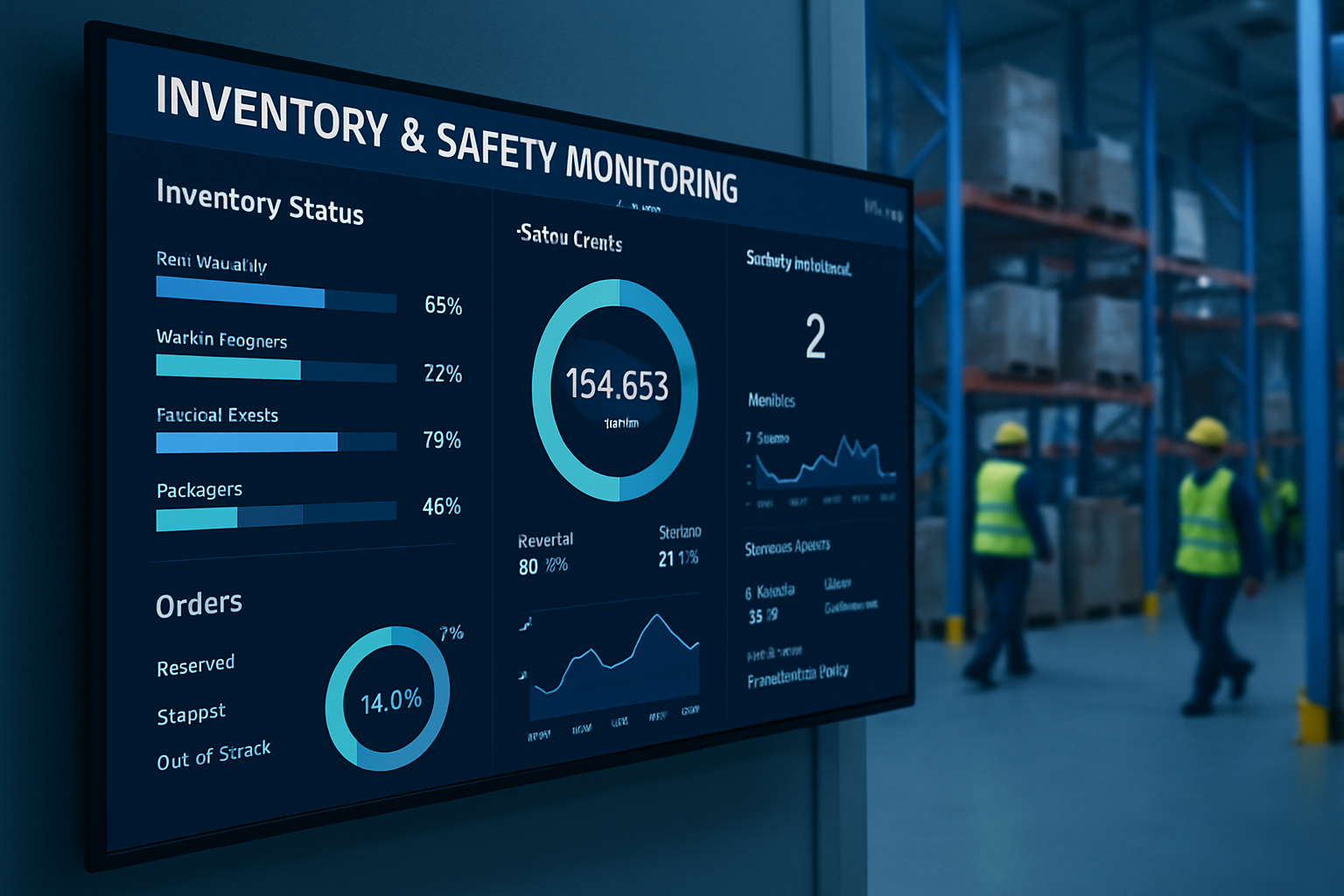
Manual checklists remain essential, but technology is amplifying their impact. The warehouse automation market reached $21.7 billion in 2024 and is expanding at a 15.1% compound annual growth rate. In addition, projections show it will reach $90.7 billion by 2034, according to Voxel AI’s automation trends report. Much of that investment is tied to both efficiency and injury prevention.
Computer vision AI platforms have demonstrated meaningful results. Therefore, some facilities deploying this technology report 77% fewer injuries and the elimination of OSHA citations within 12 months of implementation, according to Voxel AI data. These systems monitor floor activity in real-time, flagging unsafe behaviors like pedestrians entering forklift zones or workers skipping PPE.
Modern warehouse management system software plays an indirect safety role. It organizes inventory data, reduces search time, and minimizes chaotic picking patterns that lead to accidents. Real-time inventory visibility means workers spend less time navigating unfamiliar areas under time pressure. As a result, this reduces a documented contributing factor in warehouse incidents.
Similarly, understanding how fulfillment center vs warehouse environments have different automation penetration rates matters. Safety programs should reflect those differences rather than applying a one-size-fits-all approach.
Things to Know
- Safety remains the top priority for 84% of warehouse operations surveyed in 2025, according to Voxel AI. However, many still rely on informal inspections rather than documented checklists.
- OSHA does not publish a single universal “warehouse checklist.” Therefore, facilities must build their own based on applicable standards from 29 CFR 1910 and relevant NFPA codes.
- Checklist frequency matters significantly. High-traffic areas like docks and forklift lanes warrant daily checks. Meanwhile, racking inspections can be monthly if no damage events occur.
- Near-miss reporting should be embedded in your safety program. Near-misses are leading indicators of future incidents and are often overlooked in checklist-only programs.
- Seasonal surges in order volume, common in e-commerce and retail fulfillment, increase injury risk. Temporary staff unfamiliar with the facility fill gaps on the floor during these peaks.
Protect Your Facility With a Safety-First Partner
Your safety program is only as strong as the systems and partners supporting it. At Warehouse Logistics NYC, we operate with built-in safety protocols, real-time WMS visibility, and experienced fulfillment teams trained to maintain compliance across every shift.
Request a free estimate and find out how our 3PL services keep your inventory moving without cutting corners on safety. Reach out today and let us walk you through exactly how we protect your products and your people.
Frequently Asked Questions
Q: How often should a warehouse safety checklist be completed?
High-risk areas like loading docks and forklift zones should be checked daily. Full facility audits are typically conducted monthly or quarterly. Daily walkthroughs catch immediate hazards before shifts begin. Additionally, scheduled full audits create documentation trails that support OSHA compliance and help identify recurring issues that quick checks might miss.
Q: Is a warehouse safety checklist required by OSHA?
OSHA does not mandate a single checklist format. However, it does require employers to provide a hazard-free workplace under the General Duty Clause. Maintaining documented inspection records is strongly recommended and may be requested during an OSHA inspection. A checklist serves as evidence that your facility proactively identifies and addresses hazards.
Q: What are the most dangerous areas in a warehouse?
Loading docks, forklift traffic lanes, and racking systems consistently account for the highest share of warehouse injuries. According to data cited by Voxel AI, 25% of warehouse accidents happen at loading docks alone. Forklift incidents add tens of thousands of additional cases each year across U.S. facilities.
Q: Can small warehouses use the same checklist as large distribution centers?
The core categories remain the same. However, checklist scope and frequency should scale with your facility’s size, staffing, and product types. A smaller operation may combine some inspection categories, while a large multi-dock facility may need zone-specific checklists for each department. The key is consistency and documentation, regardless of scale.
Q: How does technology improve warehouse safety audits?
Computer vision AI and WMS platforms complement manual checklists by providing continuous monitoring and real-time hazard alerts. Manual inspections capture point-in-time conditions, while technology tracks behavior and environment around the clock. Together, they create a layered safety program that is more responsive than either approach alone.
The Bottom Line on Warehouse Safety Checklists
A warehouse safety checklist is not a one-time document. It is a living process that should evolve as your facility grows, your workforce changes, and new hazards emerge. The data is clear: injuries in warehousing are preventable, and structured audits are one of the most cost-effective tools available to any operation.
Start with the core categories covered here. Build in a documentation habit and revisit your checklist whenever your layout, equipment, or staffing changes. If you need a partner who takes operational safety as seriously as you do, connect with the team at Warehouse Logistics NYC to explore what a professionally managed 3PL environment looks like.