A warehouse stores inventory. A fulfillment center stores inventory and actively processes orders for direct shipment to customers. Understanding the difference between a fulfillment center vs warehouse is critical. Choosing between the two shapes your operational costs, delivery speed, and customer experience in ways that compound quickly as your business scales.
Table of Contents
- What Each Facility Actually Does
- How Costs and Contracts Differ
- When a Warehouse Makes More Sense
- When a Fulfillment Center Is the Right Fit
- Things to Know
Key Takeaways
- Warehouses focus on bulk storage; fulfillment centers handle pick, pack, and ship operations for individual orders.
- The global e-commerce fulfillment services market was estimated at $123.68 billion in 2024 and is projected to reach $272.14 billion by 2030 (Grand View Research, 2024), signaling strong momentum behind fulfillment-first models.
- 70% of consumers now expect same-day or next-day delivery (Opensend, December 2025), making fulfillment center speed a competitive factor, not a luxury.
- 79% of e-commerce companies use a third-party logistics provider for at least one fulfillment channel (Expert Market Research, 2024).
- Your order volume, SKU count, and customer expectations should drive the decision, not cost alone.
- Both models can be right simultaneously: many brands use warehouse storage for overflow and a fulfillment center for active inventory.
What Each Facility Actually Does
A traditional warehouse is a long-term storage facility. Goods arrive in bulk, sit on shelving or racking systems, and leave in pallets or large freight shipments. These shipments typically go to retailers or distribution points. Activity inside is relatively low-frequency. Warehouses allocate 45-55% of operating costs to workforce expenses (Opensend, December 2025). This percentage reflects the labor-intensive nature of receiving and staging bulk freight.
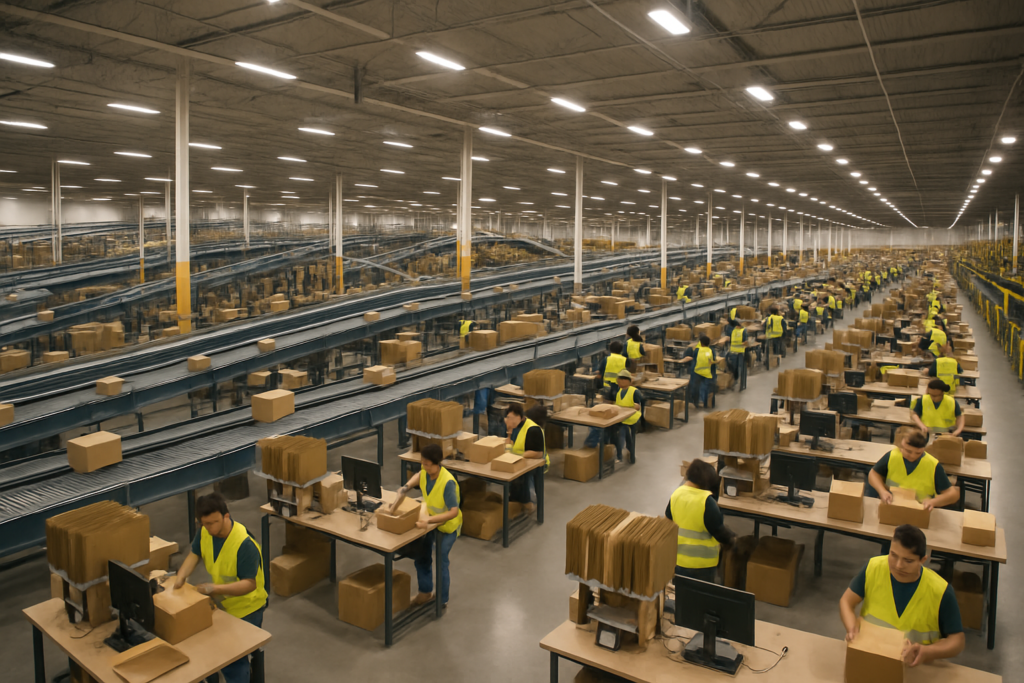
A fulfillment center operates differently. Moreover, inventory moves fast through fulfillment centers. Staff pick individual items, pack them into branded or standard boxes, and apply labels. Workers hand shipments off to carriers, often the same day an order arrives. Fulfillment centers averaged 5-7 inventory turns annually for e-commerce versus 7-10 turns for retail warehouses (Gembah, March 2026). This data illustrates how these two facility types are genuinely built for different throughput rhythms.
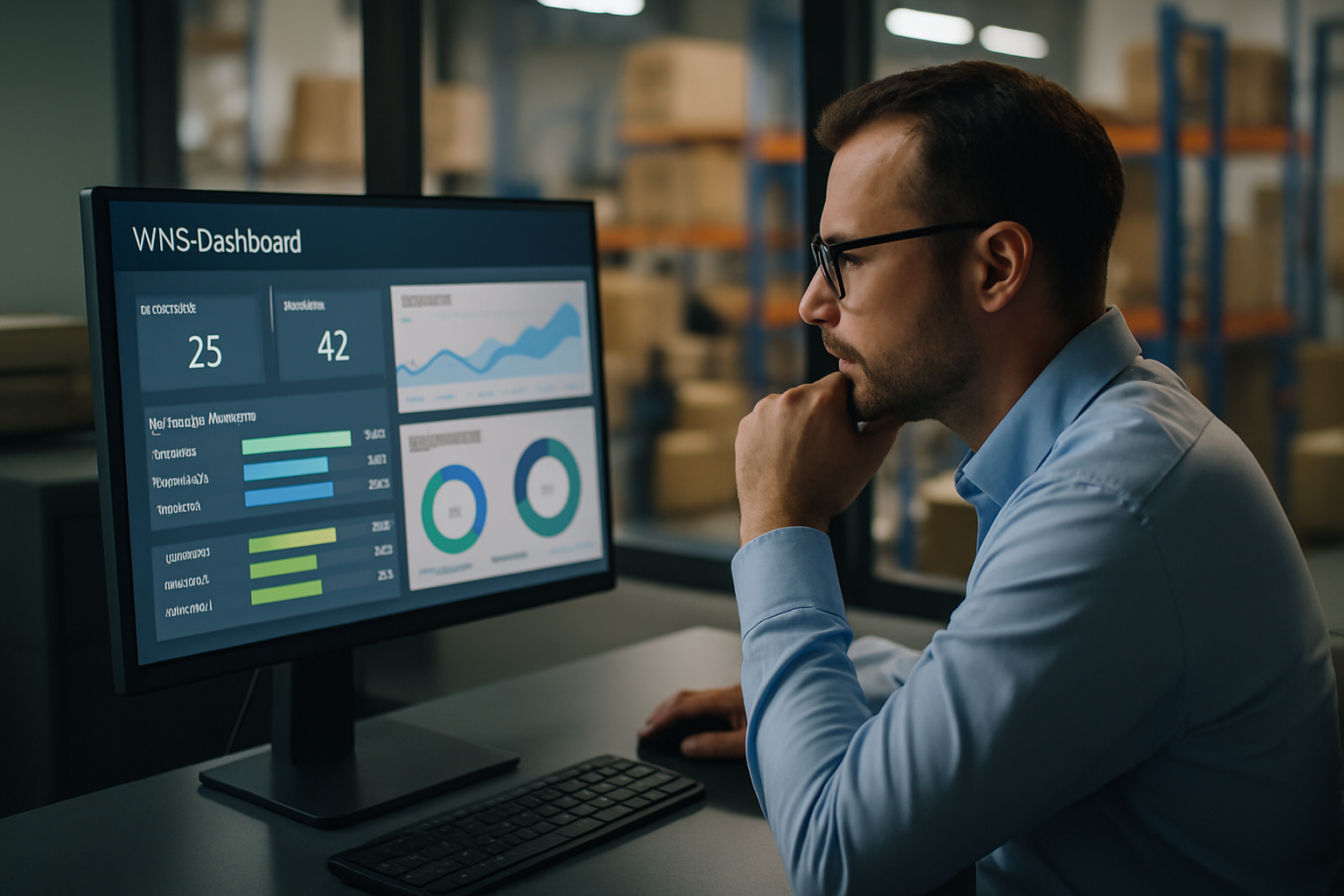
Fulfillment centers also layer in services that warehouses rarely offer. These services include kitting, returns processing, EDI-compliant wholesale routing, and real time inventory tracking how businesses stay in control of their stock through warehouse management systems. If your business ships directly to consumers or handles complex order logic, you need more than four walls and a loading dock.
How Costs and Contracts Differ Between Fulfillment Center vs Warehouse
Warehousing costs are typically structured around square footage and duration. You pay for space, and long-term leases are common. For businesses trying to how to calculate the warehouse space your business actually needs, the math starts with cubic footage, not just floor space.
Fulfillment centers charge differently. In addition, you pay for storage, but also per-order handling fees, pick-and-pack labor, and often carrier negotiation fees. Contract structures are shifting: month-to-month warehouse agreements dropped from 56.67% in 2024 to 30.23% in 2025 (The Fulfillment Advisor, January 2026). This suggests providers are locking in longer commitments as demand grows.
Third-party logistics providers held 60% of the e-commerce fulfillment market share in 2024 (Mordor Intelligence, 2024). Outsourcing shifts variable costs and removes the need to manage facility infrastructure internally.
When a Warehouse Makes More Sense
Traditional warehouse storage is appropriate when:
- You sell to retailers or wholesalers in large, infrequent shipments.
- Your inventory moves in pallets, not individual units.
- You manage your own last-mile distribution or use freight brokers.
- You need long-term or overflow space for seasonal goods.
For brands in or near major metro areas, the 6 benefits of warehouse storage in new york city include proximity to dense consumer markets and strong carrier networks. Two factors like these can cut freight costs considerably.
When a Fulfillment Center Is the Right Fit
If you sell direct-to-consumer, the fulfillment center model becomes harder to avoid. Fulfillment centers captured 41% of market share in 2024, reflecting e-commerce’s specialized storage needs (Opensend, December 2025). With 70% of consumers expecting same-day or next-day delivery (Opensend, December 2025), slow order processing is a retention problem. It’s not just a logistics inconvenience.
Fulfillment centers are the right fit when:
- You process dozens or hundreds of individual orders per day.
- You need pick, pack, kitting, or returns management built into your operations.
- Your customers expect fast, trackable shipping.
- You want to maintain visibility without building your own WMS.
Regardless of which model you use, why regular inventory audits are essential for commercial storage applies to both. Without accurate stock counts, neither fulfillment center vs warehouse model performs reliably.
Things to Know
- Many businesses need both: fulfillment centers for active SKUs and warehouse storage for overflow or slow-moving inventory.
- 38% of brands plan to increase the number of fulfillment centers they ship from in 2025 (ShipBob’s 2025 State of Ecommerce Fulfillment Report, January 2025). This is a sign that distributed fulfillment is becoming standard practice.
- More than 45,000 robots were shipped to North American warehouses in 2024 (Association for Advancing Automation, 2024). Automation is already reshaping both facility types.
- Not all 3PLs offer both models. Therefore, confirm that your provider can scale with you before signing any agreement.
Stop Guessing and Get the Right Setup for Your Operations
At Warehouse Logistics NYC, we offer both warehousing and fulfillment solutions built for e-commerce, wholesale, and retail brands operating in and around New York City. Whether you need bulk storage, same-day order processing, or a hybrid of both, our team can assess your volume and structure a model that fits. Request a free estimate today and get a clear picture of what your logistics setup should actually look like.
Frequently Asked Questions
Q: Can a business use both a warehouse and a fulfillment center at the same time?
Yes, many businesses run both simultaneously.
Active inventory goes to the fulfillment center for fast order processing. Meanwhile, slower-moving or seasonal stock stays in warehouse storage. This hybrid approach keeps fulfillment costs down without sacrificing response time on popular SKUs.
Q: Is a 3PL the same as a fulfillment center?
Not exactly, though there is significant overlap.
A 3PL (third-party logistics provider) is a company that manages logistics services.