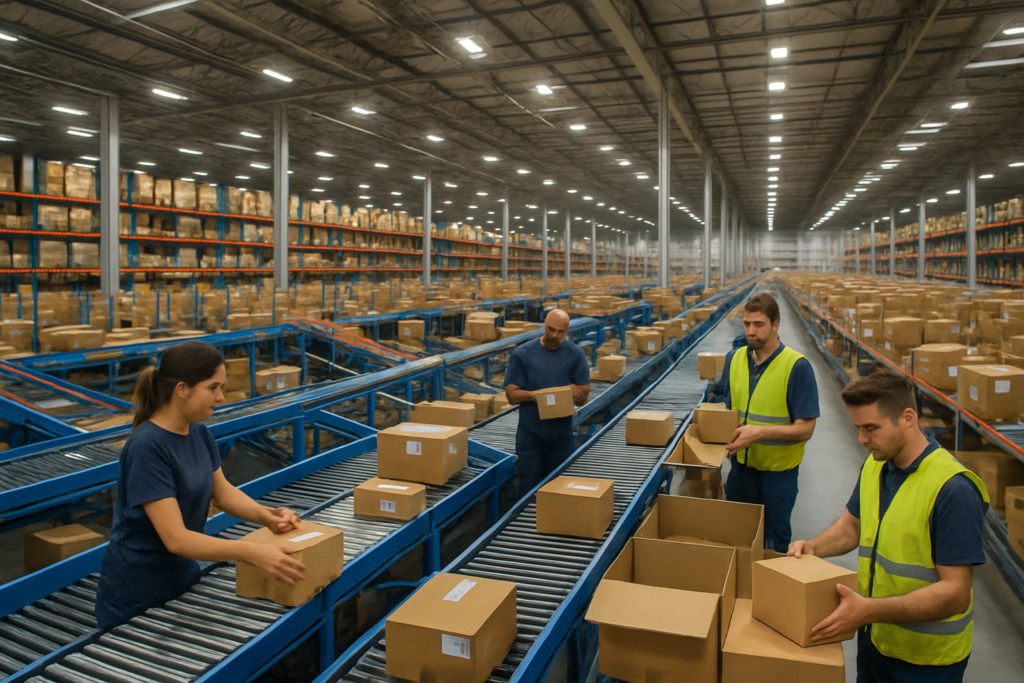
A distribution center is a specialized facility where goods are received, sorted, and shipped out to retailers, businesses, or end consumers, usually with minimal long-term storage. Unlike a traditional warehouse, a distribution center prioritizes movement over holding inventory.
Table of Contents
- Distribution Center vs. Warehouse
- How a Distribution Center Operates
- Types of Distribution Centers
- Technology Inside Modern Distribution Centers
- What to Know About Distribution Centers
Key Takeaways
- Distribution centers focus on throughput and order fulfillment, not long-term storage.
- They handle receiving, sorting, picking, packing, and outbound shipping under one roof.
- Automation adoption is accelerating: use of autonomous mobile robots rose to 20% in 2023, up from 7% the prior year, according to a Modern Materials Handling survey.
- Demand from 3PLs and distribution companies grew 13% year over year, per JLL’s 2025 US Industrial Tenant Demand Study.
- Proximity to population centers, like New York City, significantly reduces last-mile delivery costs.
- Choosing the right facility type, whether a distribution center or a warehouse, directly affects your fulfillment speed and overhead.
Distribution Center vs. Warehouse
The terms are often used interchangeably, but they serve different operational purposes. A warehouse stores goods for extended periods. In contrast, a distribution center is built for speed, processing inbound shipments and turning them around quickly to fulfill orders.
Here is a side-by-side comparison:
| Feature | Distribution Center | Warehouse |
|---|---|---|
| Primary function | Fulfillment and shipping | Long-term storage |
| Inventory dwell time | Hours to days | Weeks to months |
| Order processing | Yes (pick, pack, ship) | Minimal |
| Value-added services | Kitting, labeling, returns | Usually limited |
| Technology intensity | High | Moderate |
If your operation requires rapid order turnaround, a distribution center is the more appropriate fit. However, if you need to store seasonal or overflow inventory, a warehouse may be sufficient. Understanding how to calculate the warehouse space your business actually needs is a useful first step before committing to either model.
How a Distribution Center Operates
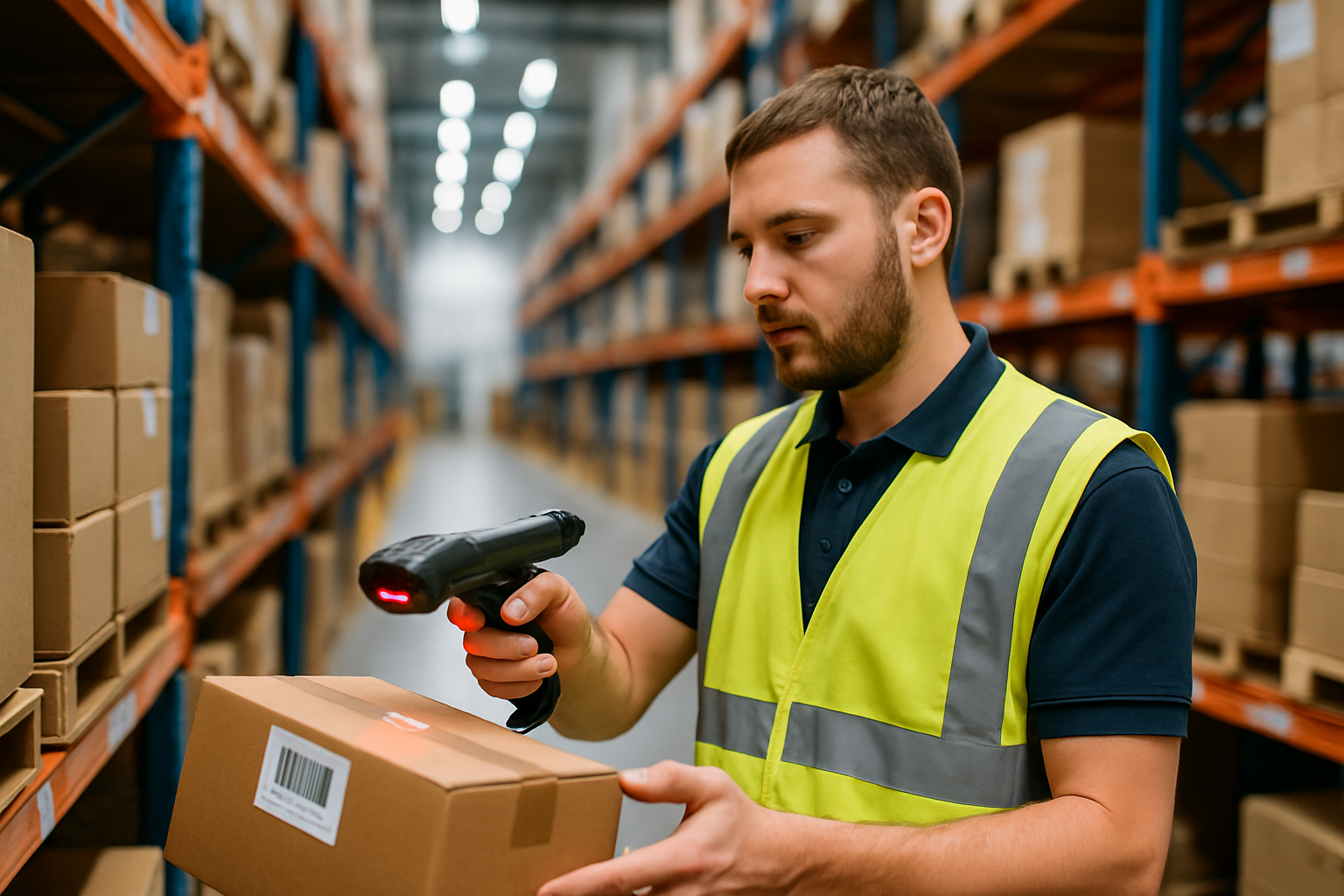
The core workflow inside a distribution center follows a predictable sequence. Understanding this process helps you evaluate whether a distribution center suits your business needs.
- Receiving: Inbound freight arrives from manufacturers or suppliers. Staff log it into a warehouse management system (WMS).
- Putaway: The system assigns products to storage locations based on pick frequency and SKU organization.
- Picking: Orders trigger individual items to be pulled from shelves. Either staff or automated systems handle this task.
- Packing and labeling: Workers package items, apply barcodes, and prepare shipments for delivery.
- Shipping: Staff sort outbound orders by carrier, load them, and dispatch them.
Moreover, returns management runs in parallel with this process. Reverse logistics is a growing operational priority, particularly for eCommerce brands dealing with 6 benefits of warehouse storage in New York City high return volumes.
Types of Distribution Centers
Not all distribution centers operate the same way. The right model depends on your industry, customer base, and order volume.
- Retail distribution centers: These facilities serve brick-and-mortar stores by consolidating bulk orders and redistributing them to individual locations.
- eCommerce fulfillment centers: These centers process individual B2C orders at high volume with tight delivery windows.
- Cross-docking facilities: They receive inbound shipments and immediately transfer them to outbound trucks with little to no storage.
- Cold storage DCs: These centers handle temperature-controlled products, common in food and beverage supply chains.
- 3PL distribution centers: Third-party logistics providers operate these facilities on behalf of multiple clients, offering shared infrastructure and scalable capacity.
Furthermore, businesses operating in the New York metro area benefit from strategic advantages that demonstrate why location choice matters as much as facility type.
Technology Inside Modern Distribution Centers
Technology has fundamentally reshaped what is a distribution center at its core. Real-time inventory visibility, robotics, and data-driven slotting have become baseline expectations rather than optional upgrades.
According to the International Federation of Robotics, more than 102,900 robotic units were sold for transportation and logistics applications in 2024 (Shopify, 2026). Autonomous mobile robots saw adoption jump to 20% in 2023 from 7% the previous year. Additionally, robotic arm usage reached 23%, up from 10%, according to a Modern Materials Handling survey.
However, infrastructure is struggling to keep pace. A 2024 Incisiv report found that 65% of companies admit their current network cannot support their needs over the next 24 months.
Real time inventory tracking how businesses stay in control of their stock addresses one of the most significant gaps. It gives operations teams accurate, live stock data across every SKU and location. Pairing that visibility with why regular inventory audits are essential for commercial storage further tightens accuracy and reduces shrinkage over time.
What to Know About Distribution Centers
- Distribution centers are not just for large enterprises. Many small and mid-sized businesses use 3PL providers to access distribution center infrastructure without owning the facility.
- Average warehouse space utilization fell from 78.5% to 73.2% in 2024, according to Logistics Management’s 2024 Warehouse/DC Operations Survey, which signals some available capacity in the market.
- Location relative to your customer base is often more important than the size of the facility itself.
- EDI compliance is a non-negotiable requirement for brands supplying major U.S. retailers through a distribution center.
Start Optimizing Your Distribution Strategy Today
If your current fulfillment setup is slowing down orders or creating inventory blind spots, it is time to evaluate a purpose-built solution. Contact Warehouse Logistics NYC to request a free estimate and see how our 3PL distribution services can streamline your supply chain from inbound receiving to last-mile delivery. Tell us your order volume, SKU count, and shipping zip codes. We will map out the right setup for your operation.
Frequently Asked Questions
Q: What is the main difference between a distribution center and a fulfillment center?
A: A fulfillment center typically handles individual B2C orders, while a distribution center may also serve wholesale or retail clients with bulk shipments. The two terms overlap significantly. However, fulfillment centers are more closely associated with eCommerce order processing. Distribution centers often have a broader scope, including B2B distribution, cross-docking, and retail replenishment.
Q: How large is a typical distribution center?
A: Distribution center size varies widely, ranging from under 100,000 square feet for regional operations to over 1 million square feet for national DCs. According to Century Conveyor citing Prologis data, nearly 180,000 warehouses and distribution facilities are expected to be in operation worldwide by 2025. The right size depends on your order volume, SKU count, and geographic coverage needs.
Q: Can a small business use a distribution center?
A: Yes. Many small and mid-sized businesses partner with 3PL providers to access distribution center services without owning facilities. This model allows smaller companies to scale fulfillment operations without heavy capital investment. In fact, demand from third-party logistics providers continues to grow year over year.