New York is one of the most complex and competitive logistics markets in the United States. As a result, choosing the right logistics partner is genuinely a high-stakes decision. A qualified logistics company in New York can streamline your supply chain, reduce overhead, and help you compete on delivery speed in one of the densest consumer markets in the world.
Table of Contents
- Why New York’s Logistics Market Is Unique
- What Services a Logistics Company in New York Should Offer
- How to Evaluate a Logistics Company in New York
- Things to Know
- The Role of 3PL Providers in NYC’s Supply Chain
Why New York’s Logistics Market Is Unique
New York’s freight and logistics sector is not just large—it is structurally different from most other U.S. markets. According to Mordor Intelligence (2025), the New York Freight and Logistics Market is estimated at USD 71.19 billion in 2025. Moreover, it is projected to reach USD 80.99 billion by 2030, growing at a CAGR of 2.67%.
That trajectory reflects a market shaped by enormous consumer density. Furthermore, it benefits from world-class port infrastructure and rapidly expanding e-commerce demand.
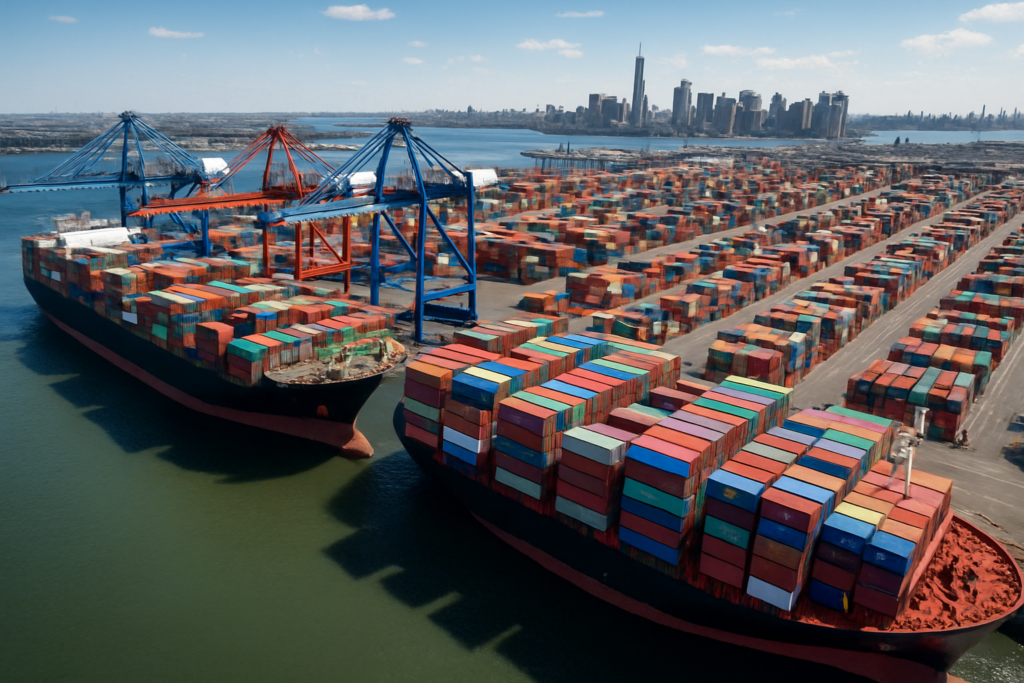
The Port of New York and New Jersey reinforces that point directly. In the first half of 2025 alone, the port handled 4.4 million TEUs. This represents a 4.9% increase over the same period in 2024. For businesses moving goods in or out of the region, that kind of port volume creates both opportunity and complexity.
Navigating container availability, drayage, and last-mile delivery inside city limits requires a partner with real operational experience. A logistics company in New York must understand the metro area’s unique demands.
Looking further ahead, New York City expects freight tonnage to grow 68% by 2045 according to Mordor Intelligence (2025). That projection is driven in large part by e-commerce. U.S. Census Bureau data from 2024 shows that e-commerce sales reached approximately USD 1.19 trillion in 2024. This accounts for 16.1% of total retail sales, up from 15.3% in 2023. Every percentage point of that growth translates into more fulfillment pressure on urban logistics networks.
Understanding supply chain management basics is a good starting point before evaluating any provider. The services you need will depend entirely on where your supply chain has gaps.
What Services a Logistics Company in New York Should Offer
Not every logistics operation in New York offers the same depth of service. For brands shipping across channels, a full-service provider matters more than a single-function warehouse.
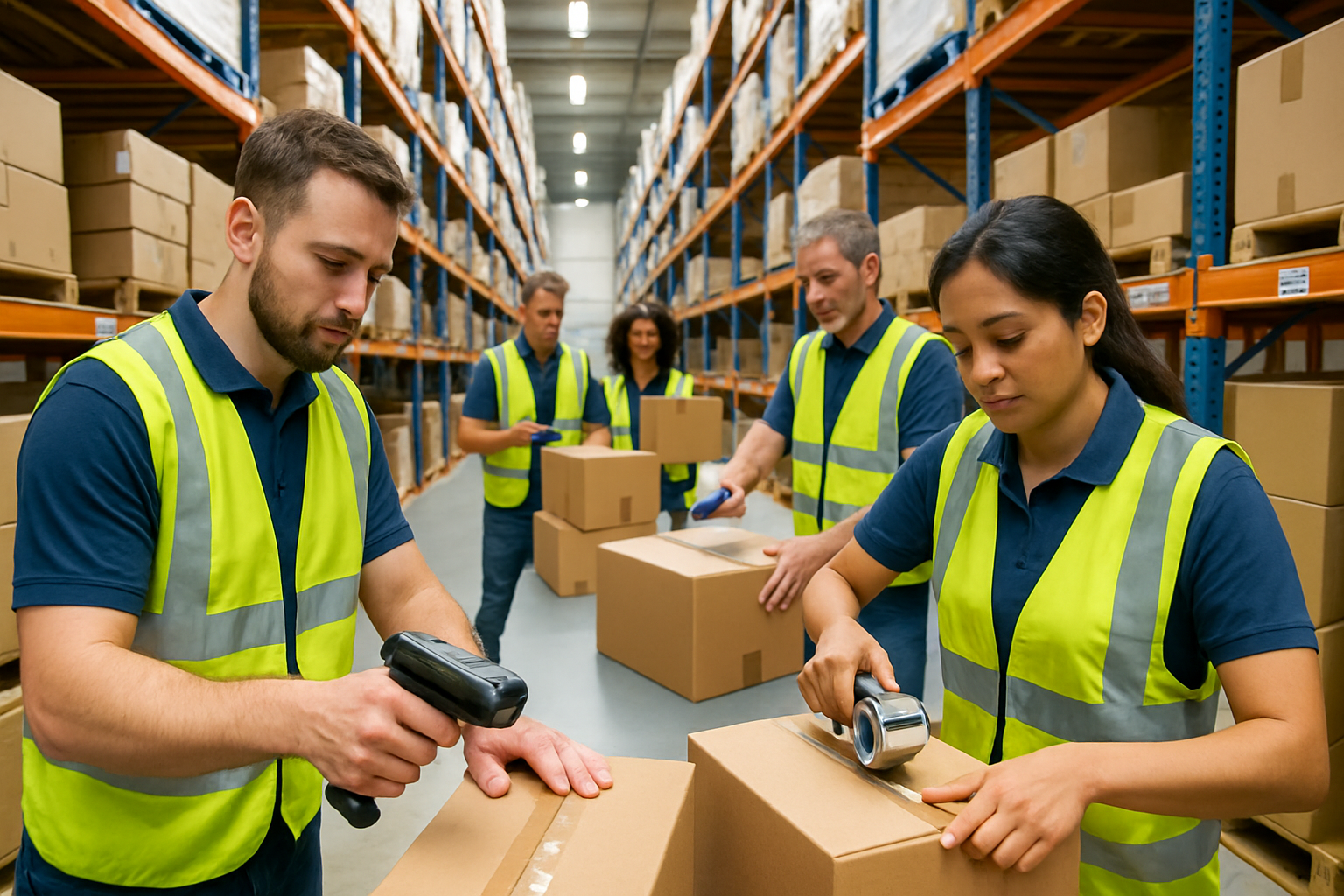
Warehouse Logistics NYC (Warehouse Logistics By Best) is a 3PL provider based in the New York area. They cover the range of services most growing brands need. Their offering includes same-day shipping, B2C and B2B fulfillment, EDI-compliant wholesale distribution, kitting and assembly, pick and pack, labeling, barcoding, repackaging, and returns management. Additionally, they provide both short-term and long-term storage. They also handle freight coordination and last-mile delivery, which is critical for serving NYC’s dense residential and commercial zones.
Real-time inventory visibility is one of the most underrated features a logistics partner can offer. Warehouse Logistics NYC uses a warehouse management system (WMS) that gives clients live access to inventory data. This reduces costly errors and supports faster replenishment decisions.
For brands that want to understand how to reduce shipping costs without sacrificing delivery speed, partnering with a 3PL that has carrier relationships is one of the most direct paths forward. A logistics company in New York with consolidated shipping options can deliver measurable savings.
How to Evaluate a Logistics Company in New York
Choosing the right provider requires looking beyond storage square footage and rate sheets. Here are the key factors worth examining carefully:
Service breadth and channel compatibility. If you sell through multiple channels—direct-to-consumer, wholesale, and marketplace—your logistics partner needs to handle each one without requiring separate vendors. Ask specifically about EDI compliance if you sell to retailers.
Technology integration. A WMS that syncs with your e-commerce platform (Shopify, WooCommerce, Amazon, etc.) is not a luxury. It is the baseline for modern fulfillment. Inventory discrepancies caused by manual reconciliation cost businesses real money.
Geographic positioning. Warehouse location relative to major carriers, ports, and your customer base directly affects transit times and shipping costs. In New York, proximity to the Port of New York and New Jersey and access to major interstate corridors (I-95, I-78, I-287) matters significantly.
Scalability. Seasonal volume swings are common in retail and e-commerce. A provider should be able to flex capacity without requiring long-term square footage commitments during slow periods.
Returns handling. Reverse logistics is often overlooked during vendor selection. However, it becomes a serious cost center at scale. Confirm that your provider has a defined process for inspecting, repackaging, and restocking returned goods.
It is also worth understanding what is ltl freight if you are regularly shipping partial truckloads. The right logistics company in New York can consolidate shipments and reduce per-unit freight costs substantially.

Things to Know
- The Northeast region held the largest U.S. logistics market share at 30% in 2024, driven by the density of cities like New York (PS Market Research, 2024). That competition means pricing varies significantly across providers.
- NYC received a USDOT RAISE grant worth USD 5.6 million in 2024 to support the Urban Freight Mobility Collaborative. This city-sponsored initiative aims at reducing emissions and improving urban freight efficiency (Mordor Intelligence, 2024).
- The U.S. logistics industry is facing a projected shortage of over 2 million workers by 2025. When evaluating a partner, ask directly about staffing stability and peak-season capacity.
- The Council of Supply Chain Management Professionals (CSCMP) released its annual State of Logistics Report in June 2025, created by Kearney and presented by Penske Logistics. It remains one of the most useful annual benchmarks for understanding cost trends and market conditions.
- EDI compliance is non-negotiable for wholesale and retail distribution. If a 3PL cannot demonstrate experience with EDI transactions, it will create friction with major retail partners.
The Role of 3PL Providers in NYC’s Supply Chain
Third-party logistics providers have become a structural part of how brands operate in New York. Rather than leasing warehouse space, hiring fulfillment staff, and managing carrier accounts independently, businesses of all sizes now outsource those functions to specialists. If you are new to this model, a clear explanation of what is a 3pl company will help you understand the cost and operational trade-offs before you commit.
For e-commerce brands specifically, the value of a 3PL in New York is tied directly to delivery speed. Consumers in the New York metro area have high expectations for two-day or same-day delivery. Brands that cannot meet those expectations lose repeat business. Therefore, a logistics company in New York with existing carrier relationships and a warehouse positioned in or near the city can fulfill those orders without the overhead of building infrastructure in-house.
Warehouse Logistics NYC serves e-commerce, retail, wholesale, manufacturing, and food and beverage clients. Their capabilities span the full order lifecycle from receiving through returns. Their positioning within NYC’s logistics network means clients benefit from proximity to major freight corridors and carrier hubs without managing that real estate themselves.
Start Optimizing Your NYC Logistics Operations Today
If your fulfillment costs are rising, your delivery times are inconsistent, or you are outgrowing your current setup, a specialized logistics company in New York can address all three problems at once. Request a free estimate from Warehouse Logistics NYC and get a clear picture of what a purpose-built 3PL solution would cost your business. Fill out the contact form today and one of their team members will follow up with a tailored proposal based on your volume, channels, and storage requirements.
Frequently Asked Questions
Q: What does a logistics company in New York typically charge for fulfillment?
Pricing varies by service type, order volume, and storage requirements. There is no single standard rate. Most 3PLs price fulfillment on a per-order or per-unit basis, with separate line items for receiving, storage, pick and pack, and outbound shipping. Requesting an itemized quote based on your actual monthly volume is the most reliable way to compare providers accurately.
Q: How do I know if my business is ready to outsource to a 3PL?
Most businesses are ready when in-house fulfillment starts consuming time and resources that should be going toward growth. Common triggers include consistent order volume above a few hundred units per month. Additionally, seasonal spikes that strain staffing, or expansion into new sales channels requiring EDI or multi-carrier shipping capabilities, signal readiness for a logistics company in New York.
Q: Can a NYC-based 3PL handle both B2C and B2B fulfillment?
Yes, many 3PLs in New York handle both channels. However, you should confirm EDI compliance and retail routing guide adherence before signing a contract. B2B fulfillment for wholesale or retail partners involves stricter labeling, pallet configuration, and documentation requirements than direct-to-consumer orders. Not every provider handles both equally well.
Q: What is the difference between a freight broker and a 3PL in New York?
A freight broker arranges transportation between shippers and carriers. In contrast, a 3PL manages a broader set of logistics functions including warehousing, fulfillment, and inventory management. Some 3PLs include freight coordination as part of their service offering, which can simplify vendor relationships and reduce the number of contracts you manage.
Q: How does same-day shipping work through a New York 3PL?
Same-day shipping depends on order cutoff times, carrier pickup schedules, and the 3PL’s warehouse location relative to the delivery zone. A 3PL based in or near New York City can often meet same-day cutoffs for metro-area deliveries when orders are placed before mid-morning. Always confirm the cutoff time and carrier network before assuming same-day availability for your product category.