

Shipping costs are one of the largest controllable expenses in any product-based business. Therefore, reducing them requires a mix of operational discipline, smarter vendor relationships, and better logistics infrastructure. Whether you’re running an eCommerce store, a wholesale operation, or a retail brand, the steps below are designed to give you a practical, actionable path forward on how to reduce shipping costs.
Key Takeaways
- Carrier diversification and rate shopping are two of the quickest wins for cutting per-shipment costs.
- Packaging optimization reduces both dimensional weight charges and material waste.
- Strategic warehouse placement closer to your customers shortens shipping zones and lowers per-package costs.
- Real-time inventory visibility prevents costly stockouts, rush shipments, and mislabeled orders.
- Partnering with a 3PL like Warehouse Logistics NYC can unlock pre-negotiated carrier rates and scalable fulfillment infrastructure.
- Audit your returns process: reverse logistics inefficiencies often hide significant cost leakage.
Why Shipping Costs Spiral Out of Control
Most businesses don’t lose money on shipping through one obvious mistake. Furthermore, the problem is usually a combination of factors: zones that are too wide, packaging that triggers dimensional weight charges, carrier contracts that haven’t been renegotiated in years, and inventory positioned in the wrong location relative to customers.
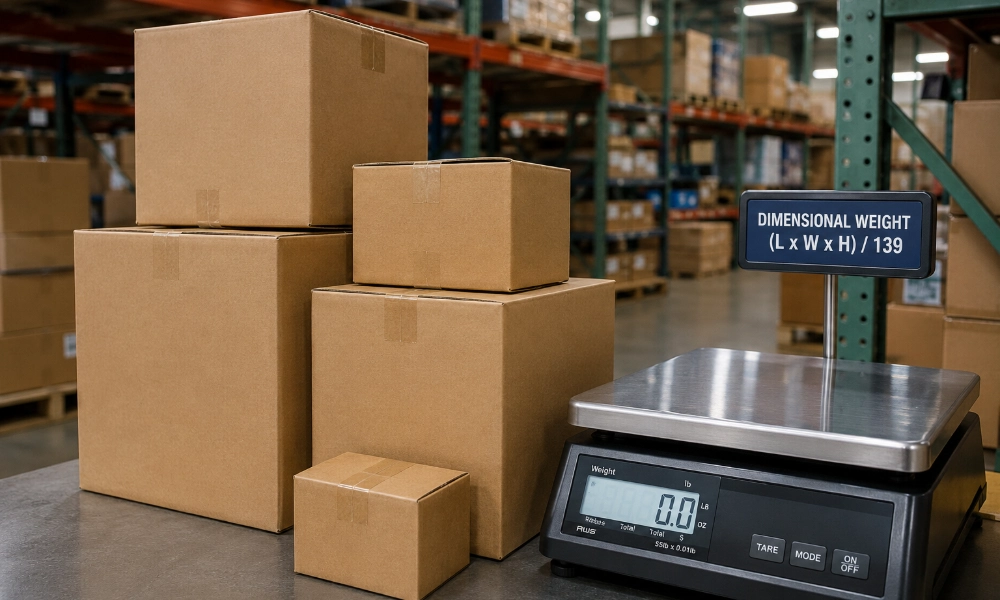
Carriers like UPS, FedEx, and USPS use dimensional weight (DIM weight) pricing. This means a lightweight but bulky package can cost as much to ship as a heavy one. If your packaging team hasn’t been briefed on DIM weight calculations, you’re likely overpaying on a significant portion of your shipments.
Zone-based pricing compounds the issue. Additionally, most major carriers divide the U.S. into shipping zones numbered 1 through 8, based on the distance between the origin and destination. A package shipped from a single New York warehouse to a customer in Los Angeles may travel through zones 7 or 8, which can cost considerably more than shipping from a fulfillment center closer to that customer.
Things to Know
- Dimensional weight pricing is calculated as (Length x Width x Height) / 139 for most major U.S. carriers. If the DIM weight exceeds actual weight, you pay the higher rate.
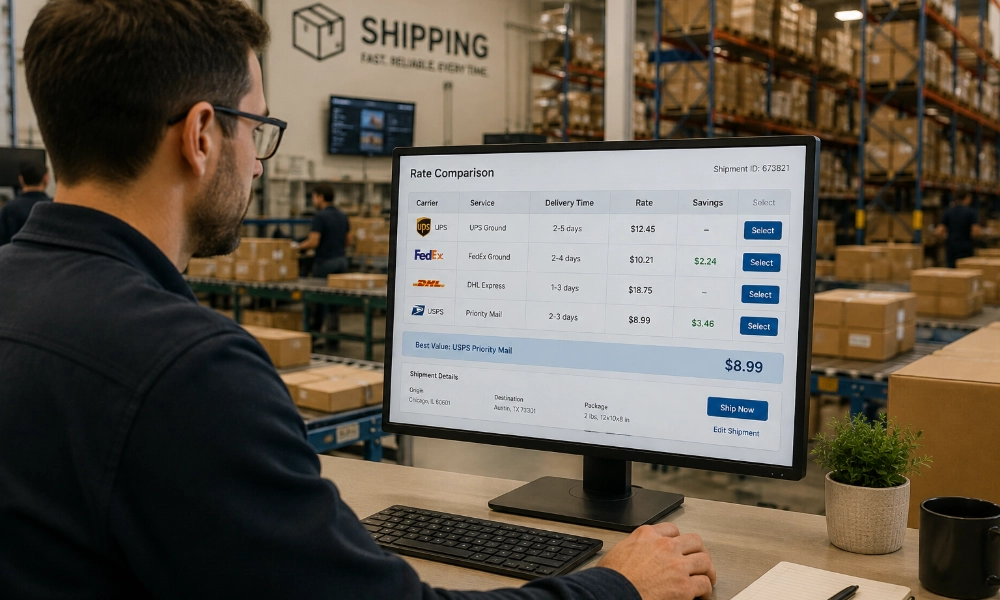
- Rate shopping tools compare live carrier rates across USPS, UPS, FedEx, and regional carriers automatically, and many multi-carrier shipping platforms offer this for free or low cost.
- Fuel surcharges are added on top of base rates and fluctuate weekly. A contract that looks favorable on paper may still carry high surcharge exposure.
- Address validation software reduces failed delivery attempts, which are a common and often overlooked source of extra charges.
- Zone skipping, which means consolidating shipments and injecting them closer to the destination before final-mile delivery, can meaningfully reduce costs for high-volume shippers.
Packaging, Carriers, and How to Reduce Shipping Costs Through Smart Contracts
Right-Size Your Packaging to Reduce Shipping Costs
One of the fastest ways businesses learn how to reduce shipping costs is by auditing their packaging. Oversized boxes filled with unnecessary void fill add both DIM weight charges and material costs. Moving to right-sized packaging, where each product category has a box designed to minimize wasted space, can produce meaningful savings per shipment at scale.
This doesn’t require expensive custom packaging from the start. Additionally, many 3PLs can help with kitting, repackaging, and assembly to ensure items ship in the most efficient configuration possible.
Negotiate Carrier Contracts and Diversify to Reduce Shipping Costs
If you’re shipping at any meaningful volume, negotiating directly with carriers or using a 3PL with pre-negotiated rates is worth pursuing. Carriers offer tiered discounts based on volume, and most businesses shipping fewer than 10,000 packages per month don’t realize they can still negotiate base rates, surcharge caps, or minimum charge reductions.
Diversifying across carriers is equally important. Therefore, regional carriers like OnTrac, Lasership, and LSO often offer competitive rates for specific geographic corridors, particularly for last-mile delivery within metro areas. Relying exclusively on one carrier limits your negotiating power and exposes you to service disruptions.
Use Technology to Shop Rates in Real Time
Multi-carrier shipping software compares live rates at the moment of label creation, automatically selecting the least expensive option that still meets your delivery commitment. This is a basic capability now offered by most fulfillment platforms and shipping APIs, and it removes the guesswork from carrier selection on a per-shipment basis.
Pairing rate-shopping tools with real time inventory tracking how businesses stay in control of their stock means you’re not just saving on each label. Moreover, you’re also preventing the expensive rush orders that result from inventory blind spots.
Strategic Warehousing Reduces Shipping Zones and How to Reduce Shipping Costs
One of the most structurally impactful ways to address how to reduce shipping costs is repositioning your inventory closer to your customer base. This is where warehouse location becomes a genuine cost lever rather than just an operational consideration.
If a large portion of your orders ship to customers in the Northeast, positioning inventory in or near New York City makes geographic sense. Understanding 6 benefits of warehouse storage in new york city illustrates why proximity to major population centers directly reduces average shipping zones. As a result, this cuts per-package costs across your entire order volume.
Getting this right starts with knowing how much space you actually need. A useful starting point is understanding how to calculate the warehouse space your business actually needs, because over-leasing storage space eats into the cost savings gained from zone reduction.
Warehouse Logistics NYC, operating as Warehouse Logistics By Best, offers short-term, long-term, and overflow storage options for eCommerce, wholesale, and retail brands. Their position within NYC’s logistics hub gives clients access to same-day shipping capabilities and efficient last-mile delivery throughout the tri-state area and beyond.
Inventory Accuracy and Returns Management
Inaccurate inventory is a hidden driver of shipping costs. When stock levels aren’t current, businesses over-order to compensate, ship from the wrong location, or pay premium rates to expedite items that should already be in stock. Conducting why regular inventory audits are essential for commercial storage explains why consistent cycle counts and physical audits are a cost-control tool, not just an administrative exercise.
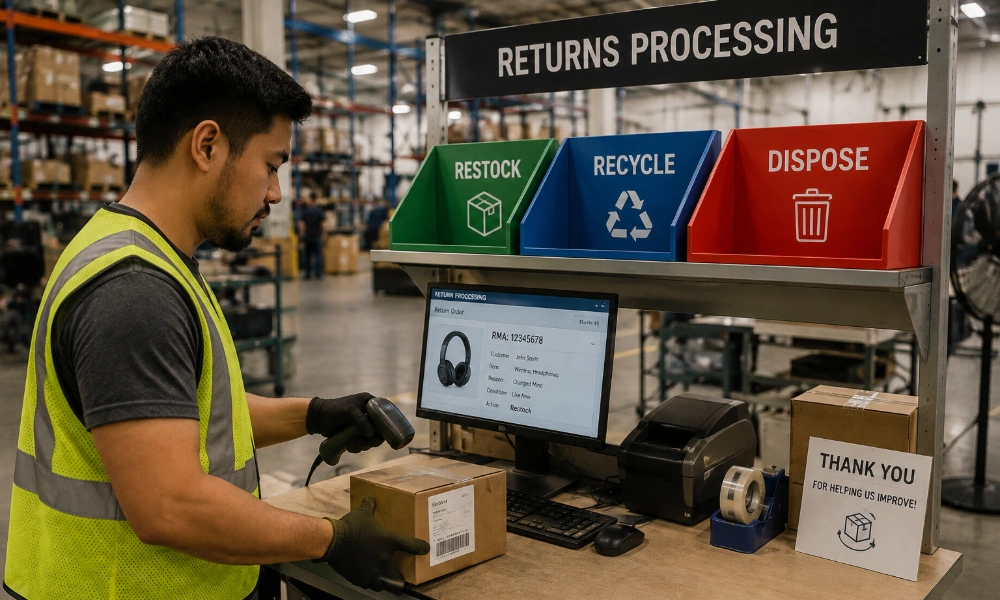
Returns are another area where costs accumulate quietly. A returns rate of even 15 to 20 percent, which is common in apparel and eCommerce broadly, can add meaningfully to your total fulfillment spend if reverse logistics isn’t handled efficiently. In addition, building a structured returns process, including clear routing rules, restocking protocols, and quality checks, reduces the labor and reshipping costs that make returns expensive.
Frequently Asked Questions
Q: What is the single fastest way to reduce shipping costs for a small eCommerce business?
Rate shopping across multiple carriers is typically the quickest win for small businesses.
Most small eCommerce businesses are using a single carrier at retail or lightly discounted rates. Switching to a multi-carrier platform that compares live rates at checkout or label creation can reduce per-shipment costs without requiring a contract or volume commitment.
Q: Does packaging size really affect what I pay for shipping?
Yes, because major U.S. carriers bill based on dimensional weight when it exceeds actual weight.
If your box is larger than necessary for the product inside, you’re paying for the space the box occupies, not just the weight of the item. Right-sizing your packaging to fit products snugly is one of the more direct cost reductions available.
Q: How does warehouse location affect shipping costs?
Warehouse location determines which shipping zones apply to your outbound orders, and higher zones mean higher per-package costs.
By positioning inventory closer to your primary customer base, you automatically ship through fewer and lower-numbered zones. For businesses with a Northeast-heavy customer profile, a warehouse in the New York City area can reduce average zone numbers meaningfully across the entire order volume.
Q: Is a 3PL cheaper than managing your own warehouse?
For most small to mid-size businesses, a 3PL is less expensive on a total-cost basis once space, labor, and carrier rates are factored in.
3PLs like Warehouse Logistics NYC operate at volume, which allows them to offer pre-negotiated carrier rates and shared infrastructure costs. The break-even point depends on your specific volume and product mix, so it’s worth modeling both scenarios before committing.
Q: How does better inventory tracking help with shipping costs?
Accurate, real-time inventory data prevents stockouts and the costly expedited shipping that follows.
When you know exactly what’s in stock and where, you can fulfill from the optimal location, avoid emergency restocking shipments, and reduce mis-picks that generate returns. A warehouse management system (WMS) with live visibility is the operational backbone of this capability.
The Bottom Line on How to Reduce Shipping Costs
Sustainable shipping cost reduction comes from layering several complementary strategies: tighter packaging, smarter carrier selection, inventory positioned closer to your customers, and the operational visibility to catch inefficiencies before they compound. No single tactic solves the entire problem, but together they create a meaningful and lasting improvement in your margins.
If you’re evaluating your current logistics setup, Warehouse Logistics NYC offers eCommerce fulfillment, B2B wholesale distribution, same-day shipping, and returns management from its NYC logistics hub. Reach out to their team to discuss how their 3PL infrastructure can be applied to your specific shipping profile.