

Warehouse automation technology refers to the use of software, robotics, and mechanical systems to perform tasks traditionally handled by human labor in storage and fulfillment environments. Moreover, when implemented strategically, it reduces errors, accelerates order processing, and gives operations teams real-time visibility into inventory.
Table of Contents
- Why Warehouse Automation Technology Is Growing So Fast
- Core Systems That Power Modern Warehouse Automation Technology
- Warehouse Automation Technology Adoption Rates: Where the Industry Actually Stands
- How Warehouse Automation Technology Fits Different Facility Types
- Things to Know
Key Takeaways
- The global warehouse automation market was valued between $21.7 billion and $26.5 billion in 2024, depending on the research firm, and is projected to grow at a compound annual rate exceeding 15% through 2034.
- Only 25% of warehouses worldwide have implemented any form of automation, meaning most operations still have significant room to modernize.
- Robotics adoption in logistics has surged, with over 450,000 logistics robots sold in 2025 compared to 75,000 in 2019, a roughly 500% increase.
- Labor shortages remain the primary driver of automation investment: 52% of supply chain organizations cite hiring and retaining workers as their top challenge (MHI, 2025).
- Warehouse automation technology works best as a layered system combining software, robotics, and process design rather than as a single bolt-on solution.
- Third-party logistics providers that have already invested in automation can offer smaller brands enterprise-grade capabilities without the capital cost.
Why Warehouse Automation Technology Is Growing So Fast
The numbers tell a clear story. According to GM Insights (2024), the global warehouse automation market was valued at USD 26.5 billion in 2024. Additionally, it is estimated to grow at a 15.9% CAGR from 2025 to 2034.
Other research firms report similar trajectories. Allied Market Research puts the 2024 figure at $21.7 billion, projecting $90.7 billion by 2034. Meanwhile, Research and Markets reported $22.1 billion in 2024, with growth to $57.8 billion by 2030 at a 17.4% CAGR (February 2026).
That growth is not driven by novelty. Rather, it is driven by pressure. E-commerce volume has raised consumer expectations for same-day and next-day delivery. Human-only operations struggle to meet that pace at scale.
The 2025 MHI Annual Industry Report found that 52% of supply chain organizations cite hiring and retaining workers as their top challenge. Furthermore, 45% point to a talent shortage. Warehouse automation technology fills that gap without sacrificing throughput.
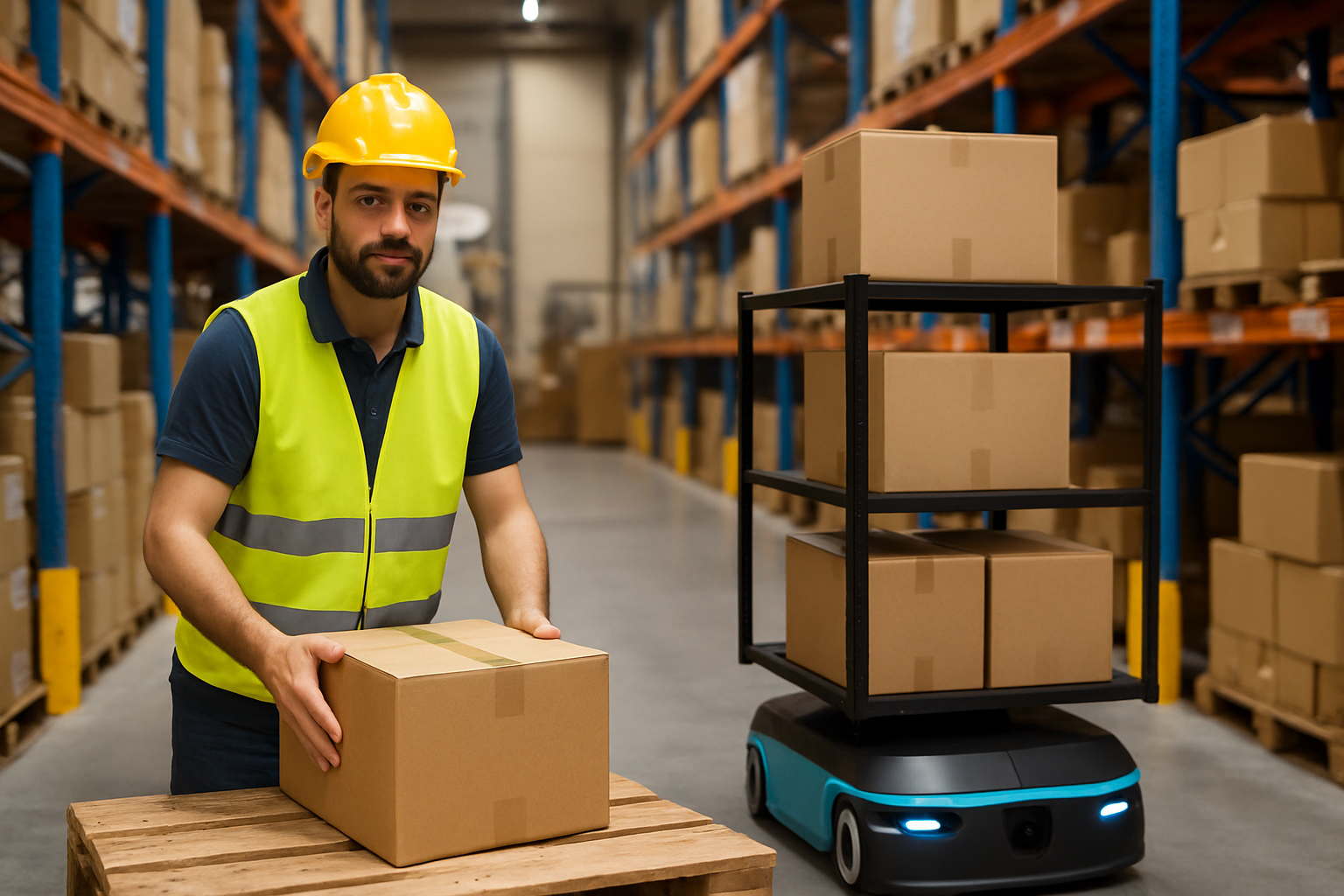
Robot deployment numbers reinforce this trend. By end of 2026, approximately 4.69 million commercial warehouse robots will be installed worldwide across more than 50,000 warehouses. As a result, over 450,000 logistics robots were sold in 2025 compared to just 75,000 in 2019, representing a roughly 500% increase over six years (thenetworkinstallers.com, 2026).
Core Systems That Power Modern Warehouse Automation Technology
Warehouse automation technology is not a single product. Instead, it is a stack of integrated systems, each handling a specific layer of the operation.
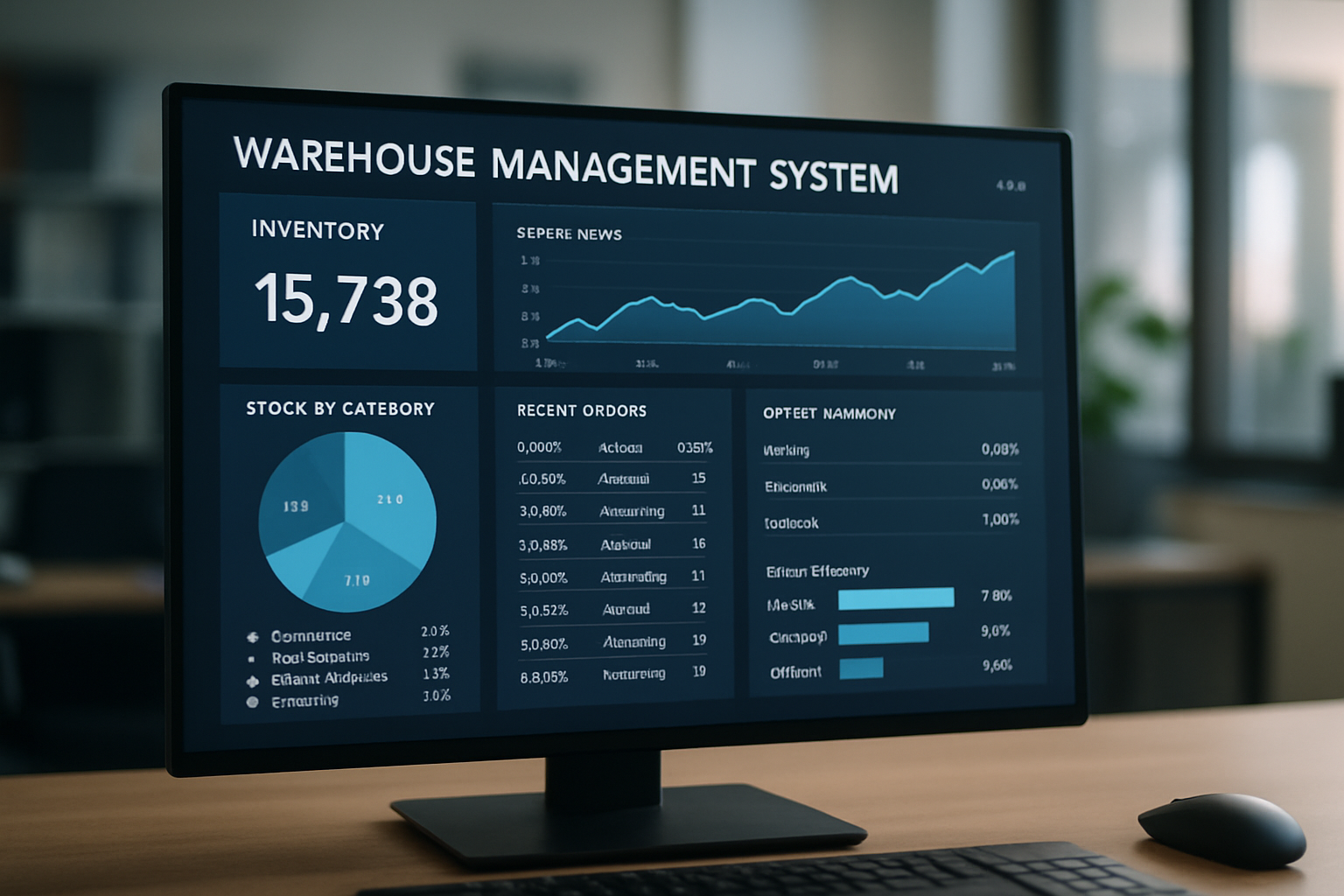
Warehouse Management Systems (WMS): Software forms the foundation. A robust warehouse management system software tracks inventory in real time. It directs labor and equipment. It provides reporting across every SKU and location. Without it, physical automation lacks the intelligence to act on data.
Autonomous Mobile Robots (AMRs) and Automated Guided Vehicles (AGVs): These systems move goods through the facility without human drivers. AMRs use sensors and mapping to navigate dynamically. AGVs follow fixed paths. Both reduce travel time, which is often the single largest labor cost in picking operations.
Conveyor and Sortation Systems: High-volume fulfillment centers use conveyor belts and automated sorters to move products. They process goods from receiving through pick-and-pack to shipping. These systems handle thousands of units per hour with consistent accuracy.
Goods-to-Person (GTP) Systems: Rather than sending workers to shelves, GTP systems bring shelves to workers. Automated storage and retrieval systems (AS/RS) and robotic shuttle systems fall into this category. They dramatically reduce pick times and floor space requirements.
Automated Labeling, Scanning, and Packaging: The 2025 Peerless Research Group and Modern Materials Handling Automation Solutions Study found that 10% of facilities have fully automated labeling. Additionally, 6% have automated packaging (down from prior years in some categories). This suggests that even basic automation tasks are not yet universal.
Warehouse Automation Technology Adoption Rates: Where the Industry Actually Stands
The gap between hype and reality in warehouse automation technology is significant. According to Meteor Space (2024), only 25% of warehouses worldwide have implemented any form of automation. Moreover, just 10% use advanced automation technologies. This means the vast majority of facilities still operate primarily with manual processes.
The MHI Annual Industry Report adds nuance. 41% of supply chain organizations currently use AI, with 47% planning adoption within five years. Additionally, 35% use robotics and automation, with 38% planning implementation within five years. Intent is high. Actual deployment is still catching up.
Cost remains the primary barrier. Enterprise-grade automation systems require substantial capital expenditure. They also demand skilled integration partners and ongoing maintenance. For small to mid-sized brands, the math often does not work when pursuing automation independently.
That is one reason many companies choose 3PL partners. These partners have already built automated infrastructure. They eliminate the need for individual companies to make massive upfront investments.
How Warehouse Automation Technology Fits Different Facility Types
Not every warehouse operates the same way. The right warehouse automation technology strategy depends heavily on facility purpose. Understanding what is a distribution center versus a standard storage warehouse matters greatly. Similarly, understanding warehouse vs distribution center differences in throughput and SKU velocity directly affects which automation systems deliver the best return.
For example, a distribution center handling thousands of daily shipments benefits enormously from conveyor sortation and AMRs. In contrast, a static storage warehouse with low SKU turnover may only need a WMS and barcode scanning to operate efficiently.
Similarly, brands need to consider the fulfillment center vs warehouse distinction when choosing a logistics partner. Fulfillment centers optimized for B2C e-commerce orders typically run with higher automation density than bulk storage facilities. Speed and accuracy per individual order matter more in these environments.
At Warehouse Logistics NYC, our infrastructure is designed for exactly that kind of high-velocity, high-accuracy fulfillment. Whether that means same-day shipping, EDI-compliant B2B orders, or returns management, our systems deliver results.
Things to Know
- Automation does not replace process design. Poorly designed workflows become faster problems, not solved ones, when you add robotics. Fix the process first.
- Integration matters as much as hardware. A WMS that cannot communicate with your robots, ERP, or e-commerce platform creates data silos. These silos cancel out efficiency gains.
- Automation ROI timelines vary significantly. Simple barcode scanning and WMS implementation can show returns within months. Full AS/RS or GTP systems often require multi-year payback periods.
- Labor and automation are not opposites. Most automated warehouses still employ people for complex tasks. They handle exception management, kitting, and quality checks. Automation shifts the work. It does not eliminate it.
- Security and uptime are operational risks. Automated systems require power redundancy, cybersecurity protocols, and maintenance plans. A system outage in a fully automated facility can halt operations entirely.
Upgrade Your Warehouse Operations Without the Capital Risk
Implementing warehouse automation technology at enterprise scale requires significant investment. You need capital for systems, integration, and expertise. Most growing brands cannot absorb that cost on their own.
Working with a 3PL provider that has already built automated infrastructure lets you access automation capabilities immediately. You eliminate the upfront capital commitment. Request a free estimate from Warehouse Logistics NYC to see exactly how our automated fulfillment network can support your shipping volume, accuracy requirements, and delivery timelines.
Contact us today to get a customized quote based on your actual order volume and SKU count.
Frequently Asked Questions
Q: What types of tasks can warehouse automation technology handle?
Automation can handle receiving, putaway, picking, packing, sorting, labeling, and shipping, depending on the system. Simpler systems like barcode scanners and WMS software handle tracking and reporting tasks. Advanced systems using AMRs, conveyors, and AS/RS handle physical movement and storage. Most operations layer multiple systems to cover different workflow stages.
Q: Is warehouse automation technology only viable for large operations?
No, smaller operations can benefit from entry-level automation like WMS software, barcode scanning, and label printing without significant capital investment. More complex robotics and conveyor systems do require scale to justify the cost. For smaller brands, partnering with an automated 3PL is often the most cost-effective path to accessing advanced capabilities.
Q: How long does it take to implement a warehouse automation system?
Implementation timelines range from a few weeks for software-only solutions to 12 to 24 months for fully integrated robotic systems. The timeline depends on the scope of the system, the complexity of existing infrastructure, and the vendor’s integration support. Phased rollouts are common for larger deployments.
Q: What is the biggest risk of automating a warehouse?
The biggest risk is over-automating before workflows are optimized. This can lock in inefficiencies at scale. Other risks include system downtime, cybersecurity vulnerabilities, and integration failures between software platforms. Thorough planning and vendor vetting reduce these risks significantly.
Q: How does automation affect warehouse staffing?
Automation typically reduces headcount for repetitive physical tasks. However, it increases demand for technicians, system operators, and supervisors. The MHI 2025 Annual Industry Report found that 52% of supply chain organizations cite hiring and retaining workers as their top challenge. This suggests automation is being adopted partly to address workforce gaps rather than replace a willing labor pool.
The Bottom Line on Warehouse Automation Technology
Warehouse automation technology is no longer a future-state concept. It is an active investment category with measurable adoption rates, verified market data, and real operational stakes. The question for most businesses is not whether to automate, but how to access automation cost-effectively given their current scale and capital position.
For brands that are not ready to build their own automated infrastructure, the most practical step is to work with a 3PL partner. These partners have already made that investment. Review your current fulfillment costs, error rates, and shipping timelines. Use those numbers as the baseline for evaluating what an automated operation could deliver.