
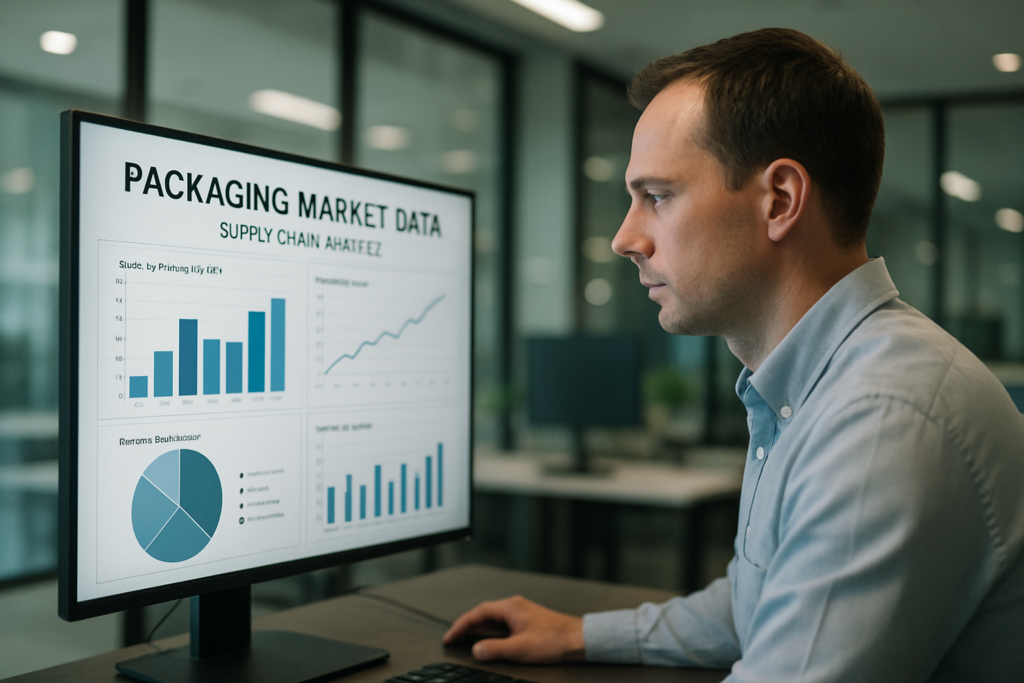
Professional packaging and labeling services encompass the preparation, branding, barcoding, and compliance marking of products before they reach retailers or end consumers. Additionally, packaging and labeling services reduce errors and cut overhead for eCommerce and wholesale brands. Outsourcing these functions to a third-party logistics provider can accelerate order throughput significantly.
Table of Contents
- What the Market Tells Us About Demand
- What Packaging and Labeling Services Actually Include
- Why Compliance and Accuracy Matter in Packaging and Labeling Services
- How a 3PL Handles Packaging and Labeling Services Inside a Warehouse
- Things to Know
- Take the Next Step With Your Packaging and Labeling Services Operations
- Frequently Asked Questions
Key Takeaways
- Packaging and labeling services cover far more than applying a sticker, including compliance barcoding, kitting, repackaging, and retailer-specific requirements.
- The global packaging and labeling services market is projected to grow from $53.36 billion in 2025 to $56.62 billion in 2026 (The Business Research Company, 2025).
- Accurate labeling directly affects inventory accuracy, shipping speed, and your ability to sell through major retail channels.
- A 3PL with integrated WMS technology can automate label generation, reducing human error and speeding up fulfillment.
- Sustainable packaging is becoming a purchasing factor: a Mintel survey found that 70% of consumers are willing to pay extra for sustainable labels and packaging (2024).
- Outsourcing to a 3PL lets your team focus on growth while experts handle the operational complexity.
What the Market Tells Us About Demand
The scale of demand for packaging and labeling services is no longer a niche concern. According to The Business Research Company (2025), the market will grow from $53.36 billion in 2025 to $56.62 billion in 2026. This represents a compound annual growth rate of 6.1%.
That growth is being driven by three key factors. First, eCommerce expansion accelerates packaging volumes. Second, stricter retail compliance requirements mandate precision. Third, increasing consumer expectations reshape product presentation standards.
On the labeling side specifically, Grand View Research (2024) values the labeling services market at USD 5,270 million in 2024. They project it will reach USD 8,111.1 million by 2030 at a CAGR of 7.5%. The food and beverage segment alone was valued at USD 18.5 billion in 2024 (Research and Markets, 2024). This reflects just how central accurate labeling is to regulated product categories.
Meanwhile, the global packaging labels market was valued at USD 55.6 billion in 2024. Furthermore, it is estimated to grow at a CAGR of 4.6% through 2034 (GM Insights, 2025). Pressure Sensitive Labels dominate with a 40.3% market share. Plastic holds a 46.1% share of materials used (Market.us, 2025).
Consumer sentiment is also reshaping decisions. A 2024 Mintel survey found that 70% of consumers are willing to pay extra for sustainable labels and packaging. This means the materials and presentation choices brands make at the packaging stage now carry real purchasing weight.
What Packaging and Labeling Services Actually Include
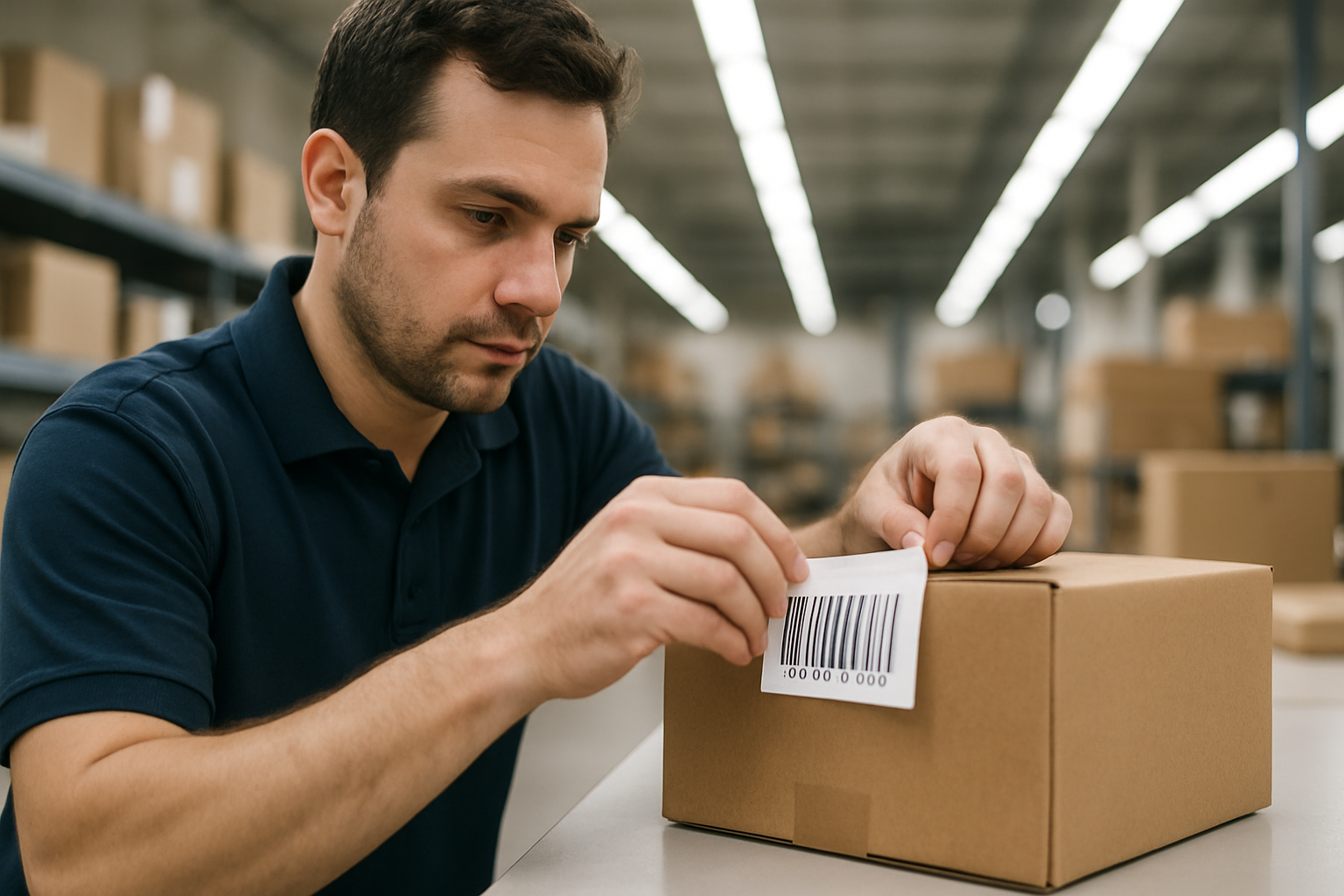
The term covers a broader range of tasks than most brand owners initially realize. At its core, packaging and labeling services involve preparing products for sale or distribution. They must meet both brand standards and channel-specific requirements. Here is what that typically looks like in practice:
- Custom packaging and repackaging: Remove manufacturer packaging and replace it with branded boxes, poly bags, or retail-ready formats.
- Kitting and assembly: Bundle multiple SKUs into a single sellable unit, common in subscription boxes and promotional sets.
- Barcoding and labeling: Apply GS1-compliant barcodes, FNSKU labels for Amazon FBA, UPC codes, and retailer-specific tags.
- Compliance labeling: Add FDA-required information, country-of-origin labels, hazmat warnings, or ingredient disclosures.
- Quality checks: Verify label placement, readability, and product condition before shipment.
Understanding the what is a distribution center distinction is useful here. Distribution centers often carry out these value-added services as products move through the supply chain. They do not simply store inventory for long periods.
RRD’s 2024 Packaging and Labels Insight Report surveyed over 300 decision-makers. The findings show that 75% of packaging respondents and 60% of label respondents expect to make functional design-related changes within the next two years (RRD, 2024). That signals brands are not treating packaging as static. They view it as a regularly revisited, strategically managed function.
Why Compliance and Accuracy Matter in Packaging and Labeling Services
Labeling errors are one of the most common and costly mistakes in supply chain operations. A mislabeled shipment sent to a major retailer like Target or Walmart can trigger chargebacks. Additionally, returns or vendor penalties may follow. For Amazon sellers, incorrect FNSKU labeling leads to inventory being received into the wrong bin. The system may flag it for removal.
Regulatory requirements add another layer of complexity. The U.S. Food and Drug Administration (FDA) mandates specific label formats for food, supplements, and over-the-counter products. The Federal Trade Commission (FTC) governs environmental and sustainability claims on packaging. Therefore, understanding which regulations apply to your product category is not optional. Non-compliance carries real financial and reputational consequences.
The warehouse vs distribution center differences matter in this context. Compliance labeling is most effectively handled at a distribution point, not a static storage facility. If your operation centers on long-term warehousing without a dedicated fulfillment function, compliance tasks can easily fall through the cracks.
How a 3PL Handles Packaging and Labeling Services Inside a Warehouse
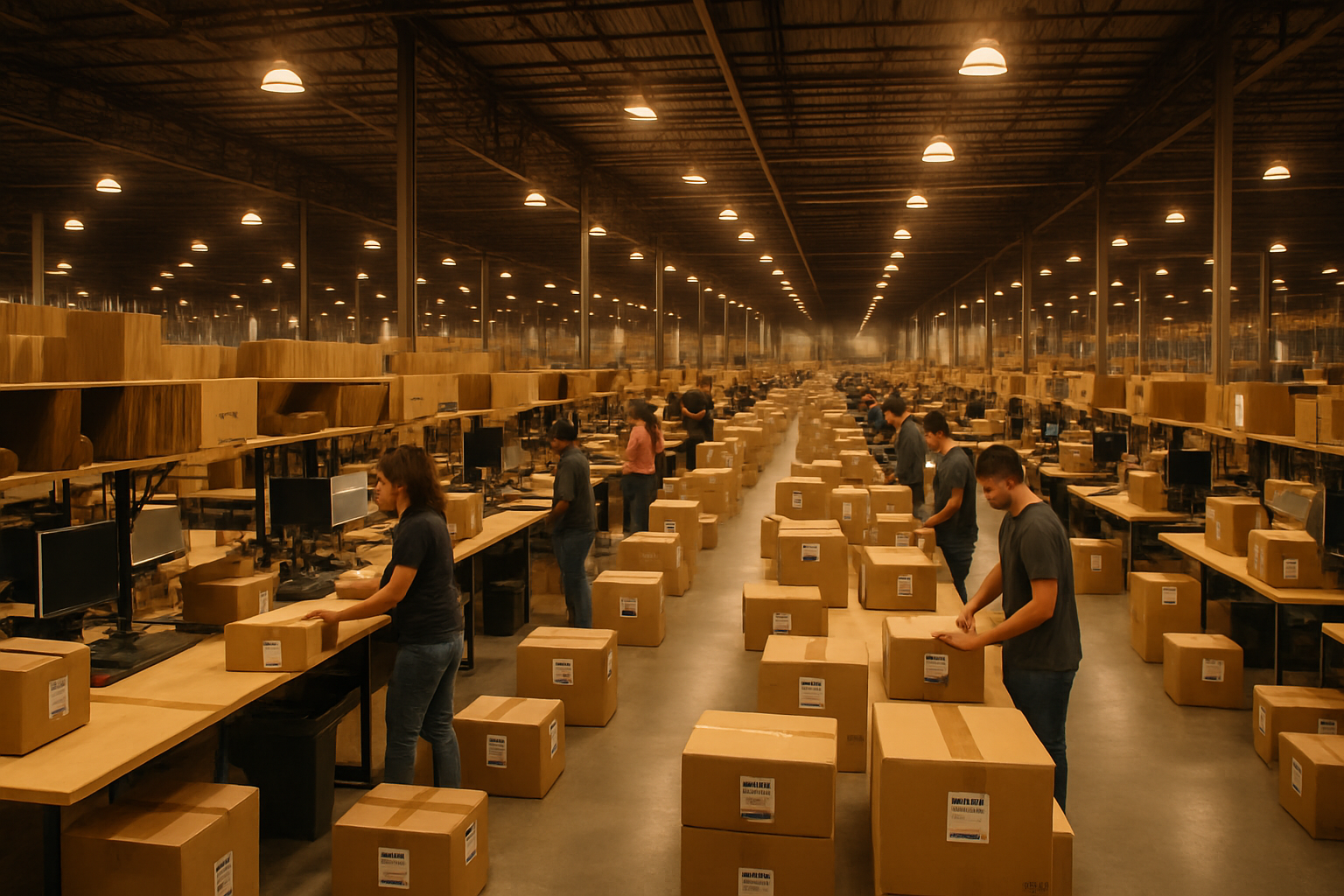
A well-equipped 3PL integrates packaging and labeling services directly into its fulfillment operations. Your products move from receiving to outbound shipping without bottlenecks. The key enabler is technology.
Warehouse management system software automates label generation at the point of pick-and-pack. It pulls the correct template based on the destination channel. Whether that is an Amazon FBA shipment, a direct-to-consumer order, or a retailer purchase order, the system adapts accordingly.
At Warehouse Logistics NYC, we handle labeling and barcoding, repackaging, and kitting as part of our broader fulfillment offering. Our WMS provides real-time inventory visibility. Therefore, every label applied is tracked against a specific SKU and lot. This is critical for product recalls, audits, and returns management.
The fulfillment center vs warehouse distinction is worth understanding here. A fulfillment center is purpose-built to execute these tasks at volume and speed. Businesses that treat a standard storage warehouse as a packaging hub tend to encounter slower throughput. In addition, they experience higher error rates.
The U.S. flexible packaging industry reached $42.6 billion in annual sales in 2024. This figure increased from $41.4 billion in 2023, a 2.9% growth rate (Flexible Packaging Association, 2025). That growth reflects the increasing volume of packaged goods moving through fulfillment networks across the country. It puts real pressure on 3PLs and brands alike to handle packaging and labeling services efficiently at scale.
Things to Know
- Not all 3PLs offer the full range of services. Some focus solely on storage or basic fulfillment and may not support retailer-specific compliance labeling or kitting.
- GS1 barcodes are the U.S. standard for retail and supply chain identification. Using non-GS1 codes can cause issues with major retailers and freight carriers.
- Sustainable packaging choices can affect shipping costs. Lighter or smaller materials reduce dimensional weight charges, which impacts your total cost per unit.
- Pressure Sensitive Labels are the dominant label format in the market, favored for their versatility across materials and temperatures (Market.us, 2025).
- If you sell in regulated categories (food, supplements, cosmetics), labeling requirements vary by state as well as federal law. California, for example, has Proposition 65 disclosure requirements that apply to many consumer products.
Take the Next Step With Your Packaging and Labeling Services Operations
Inefficient or non-compliant packaging slows your entire supply chain down. It can cost you shelf space with major retail partners. If your current setup cannot handle labeling, kitting, and compliance at the speed your business demands, now is the time to reassess.
Request a free estimate from Warehouse Logistics NYC to see how our packaging and labeling services fit your specific channel requirements. Tell us about your SKUs, your sales channels, and your volume. We will respond with a clear, no-obligation plan.
Frequently Asked Questions
Q: What is the difference between packaging and labeling services?
Packaging refers to the physical preparation of a product for sale or shipment. Labeling refers to the information applied to that packaging for identification, compliance, or branding purposes. In practice, the two functions are tightly connected. A 3PL typically handles both together. This ensures packaging choices are compatible with the labeling method. Additionally, it confirms all required information is present before shipment.
Q: Do I need a 3PL to handle packaging and labeling, or can I do it in-house?
In-house packaging and labeling is feasible at low volumes. However, most growing brands find it becomes a bottleneck as order counts rise. A 3PL brings dedicated staffing, equipment, and systems for these tasks. Therefore, the cost per unit often decreases at scale compared to maintaining your own packaging operation.
Q: What label formats does Amazon require for FBA shipments?
Amazon FBA requires FNSKU labels on all individual units. It also requires specific box content labels and shipment labels for each carton. Label specifications cover size, placement, and barcode readability. Errors in FNSKU labeling are one of the most common causes of inventory receiving delays at Amazon fulfillment centers.
Q: How do sustainable packaging requirements affect labeling?
Sustainable packaging often requires additional label disclosures, especially if you are making environmental claims like “recyclable” or “compostable.” The FTC’s Green Guides set standards for what qualifies as a legitimate environmental claim. Brands making unsupported claims risk enforcement action and consumer backlash.
Q: Can packaging and labeling services handle multiple retail channels at once?
Yes, a properly equipped 3PL can manage channel-specific packaging and labeling requirements simultaneously. It uses WMS-driven rules to apply the correct label for each destination. This is especially valuable for brands selling across Amazon, direct-to-consumer, and wholesale simultaneously. Each channel has distinct labeling and packaging standards.