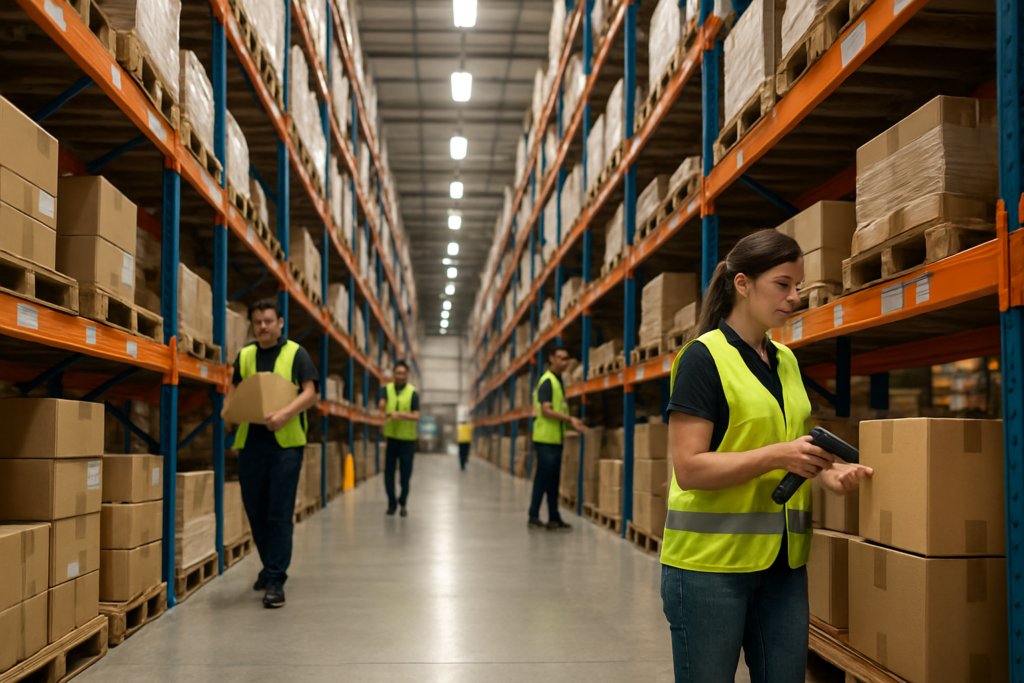
A 3PL company, or third-party logistics provider, is an outside firm that manages some or all of a business’s supply chain operations. These operations include warehousing, fulfillment, and shipping. Rather than running your own warehouse and logistics infrastructure, you contract with a 3PL to handle those functions on your behalf. This model lets you focus on core business activities while a specialized partner manages the complexity of physical inventory.
Key Takeaways
- A 3PL company takes over warehousing, order fulfillment, and distribution so your team can focus on growth.
- 3PLs serve businesses of all sizes, from early-stage eCommerce brands to large wholesale and retail operations.
- Cost savings come from shared infrastructure, not just reduced headcount.
- Not all 3PLs offer the same services — EDI compliance, kitting, and returns management vary widely by provider.
- Location matters significantly; proximity to your customers and freight corridors directly affects delivery speed and cost.
- Warehouse Logistics NYC operates as a full-service 3PL in one of the country’s most strategic logistics hubs.
Table of Contents
- What a 3PL Company Actually Does
- Core Services a 3PL Company Provides
- Who Uses a 3PL Company and Why
- How 3PL Pricing Works
- Choosing the Right 3PL Company for Your Operation
- Things to Know
What a 3PL Company Actually Does
When a business ships products, it needs several key functions. These include space to store inventory, people to pick and pack orders, systems to track stock levels, and a network to move freight. Building all of that in-house is expensive and operationally complex.
Furthermore, a 3PL company absorbs that complexity by providing the physical infrastructure, the technology, and the trained staff. Your business simply sends in inventory and focuses on selling.
At its core, a 3PL company receives your goods and stores them in a shared or dedicated warehouse facility. The provider processes outbound orders as they come in. Additionally, they coordinate the delivery to your end customers or retail partners. The arrangement is flexible by design. Some businesses outsource everything. However, others keep some functions in-house and hand off only fulfillment or only freight coordination.
Core Services a 3PL Company Provides
Not every 3PL offers the same menu of services. However, a full-service provider typically covers the following areas.
Warehousing and Storage
This includes short-term, long-term, and overflow storage depending on your inventory cycles. Seasonal brands, importers, and eCommerce businesses commonly use overflow storage during high-volume periods like Q4.
Order Fulfillment
Pick and pack is the operational heart of most 3PL arrangements. When an order comes in through your sales channel, the 3PL team picks the item from the shelf. They pack it per your specifications and ship it. Moreover, same-day shipping capability is a meaningful differentiator here, particularly for B2C brands competing on delivery speed.
B2B and Wholesale Fulfillment
Retailers and wholesale accounts often require EDI-compliant shipments. This means meeting strict routing guides, labeling requirements, and documentation standards set by companies like Target, Walmart, or regional grocery chains. A capable 3PL will have EDI infrastructure already in place.
Value-Added Services
Kitting and assembly, custom labeling, barcoding, and repackaging fall under this category. In addition, these services are especially useful for subscription box brands, promotional bundles, and products that need retail-ready packaging.
Returns Management
Reverse logistics is often underestimated. A 3PL company handles incoming returns and inspects the items. They restock sellable units and process disposals or refurbishments according to your policies.
Freight and Last-Mile Delivery
Many 3PLs coordinate inbound freight from ports or manufacturers and manage outbound last-mile delivery. They do this through carrier networks or proprietary routes.
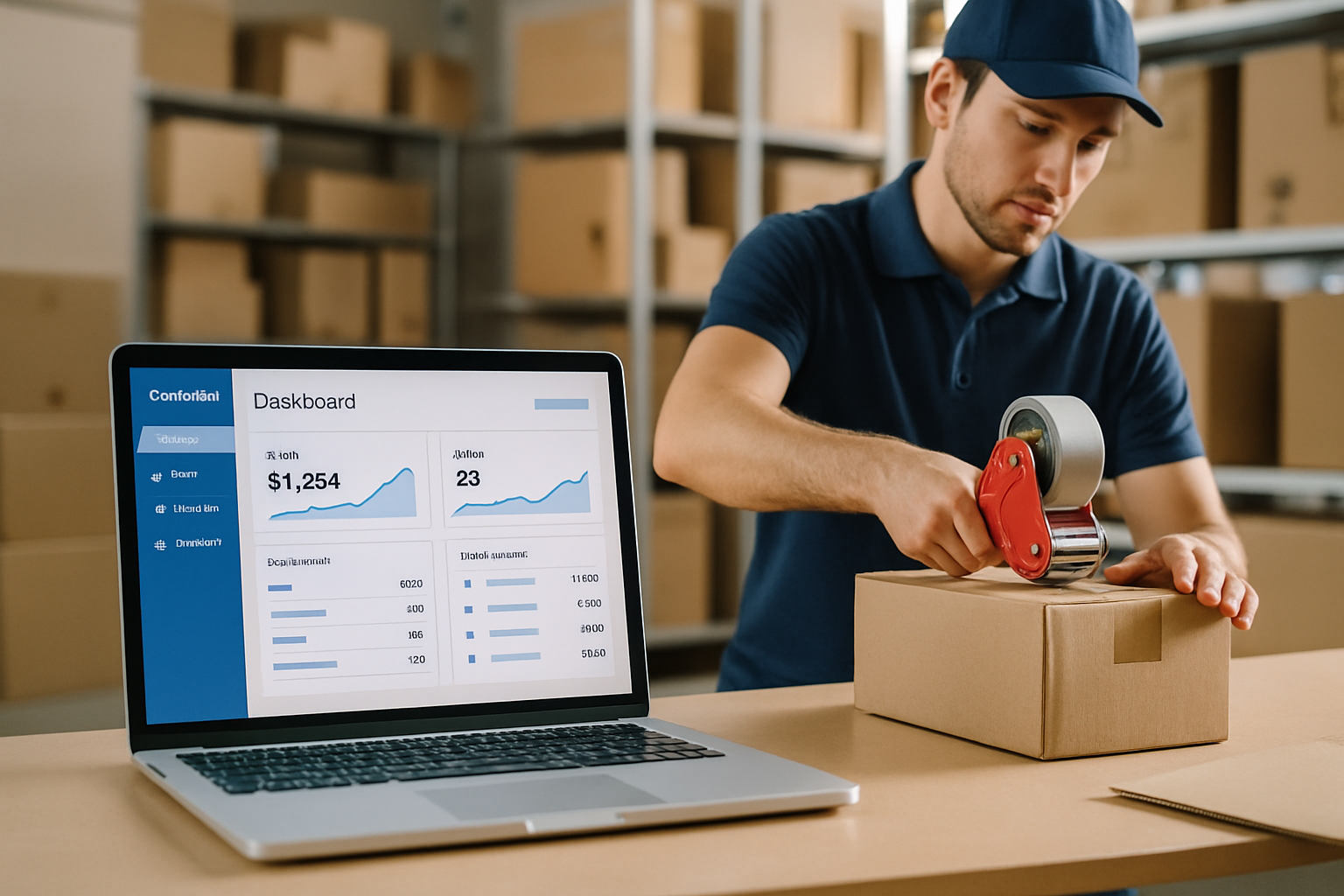
Understanding real time inventory tracking how businesses stay in control of their stock is also central to what separates a modern 3PL from a basic storage vendor. A warehouse management system (WMS) gives clients visibility into stock levels, order status, and movement history in real time.
Who Uses a 3PL Company and Why
The short answer: businesses that sell physical products and have more volume than they can efficiently manage on their own. Additionally, businesses that want to grow without investing in their own warehouse infrastructure also use 3PLs.
eCommerce brands are among the most common 3PL clients. A direct-to-consumer brand selling on Shopify or Amazon needs fast, accurate fulfillment. However, they do not need to maintain a warehouse lease, hire a warehouse team, and buy equipment.
Wholesale and retail suppliers use 3PLs to manage compliance-heavy shipments to big-box retailers and specialty stores. Furthermore, the EDI requirements alone can be a full-time operational focus.
Manufacturers and importers often use 3PLs as a distribution layer between production and the end market. Moreover, they use this approach especially when they lack domestic storage or distribution infrastructure.
Food and beverage companies work with 3PLs that have food-safe storage and temperature-controlled areas. They also need providers with experience in regulatory requirements around labeling and handling.
For businesses evaluating a location-based strategy, understanding the 6 benefits of warehouse storage in new york city is worth reviewing. New York City’s density, port access, and consumer base make it one of the most strategically valuable logistics positions on the East Coast.

How 3PL Pricing Works
3PL pricing is not one-size-fits-all. Costs are typically structured around a few core variables.
| Cost Category | What It Covers |
|---|---|
| Receiving fees | Labor and processing to intake your inventory |
| Storage fees | Billed per pallet, bin, or square foot per month |
| Pick and pack fees | Per-order or per-unit fees for fulfillment labor |
| Shipping costs | Carrier fees passed through, often at negotiated rates |
| Value-added services | Kitting, labeling, repackaging billed per unit or per project |
| Returns processing | Per-return handling and restocking fees |
Before signing with a 3PL, businesses should evaluate their actual inventory footprint. In addition, review how to calculate the warehouse space your business actually needs. This helps you enter those conversations with accurate projections. As a result, you can avoid over- or under-estimating your storage costs.
Choosing the Right 3PL Company for Your Operation
Selecting a 3PL is a meaningful operational decision. The wrong partner creates order errors, delayed shipments, and compliance failures that damage your brand. However, the right one functions as an extension of your team.
Key factors to evaluate include:
- Technology: Does the 3PL offer a WMS with client-facing visibility? Can it integrate with your existing sales channels?
- Location: Is the facility positioned near your major customer base or key freight corridors?
- Service scope: Does the 3PL company offer all the services you need today, plus the ones you will likely need as you scale?
- Industry experience: Has the provider handled your product type before, including any relevant compliance requirements?
- Accountability structures: How does the 3PL handle errors, damaged goods, or missed SLAs?
Regular oversight matters even after you have chosen a provider. Furthermore, why regular inventory audits are essential for commercial storage reinforces why ongoing accuracy checks between your records and the 3PL’s WMS are a standard best practice. Therefore, this is not an optional add-on.
Things to Know
- Not all 3PLs are built for growth. Some operate as transactional vendors. However, others act as strategic partners. Clarify which model a provider operates under before committing.
- EDI compliance is a specialty. If you sell to major retailers, confirm that your 3PL has verified EDI infrastructure before you receive your first chargeback.
- Returns volume is often underestimated. In eCommerce, return rates in certain categories run high. Your 3PL’s reverse logistics process will affect both your cost per unit and your customer experience.
- Storage costs compound quickly. Slow-moving SKUs sitting in a 3PL warehouse accumulate fees. Therefore, audit your inventory velocity before committing to a storage arrangement.
- Location affects more than shipping speed. Being near a port, a major metro, or a freight hub influences inbound freight costs, last-mile coverage, and same-day delivery capabilities.
Work With a 3PL That Knows What You Actually Need
If you are ready to stop managing logistics piecemeal and want a partner with the infrastructure to support eCommerce, wholesale, and retail fulfillment at scale, Warehouse Logistics NYC is built for exactly that. We offer same-day shipping, real-time WMS visibility, EDI-compliant B2B fulfillment, and a full suite of value-added services from our New York City location. Request your estimate today and let us build a fulfillment solution around your specific operation. Tell us your current volume, product type, and growth targets, and we will come back with a clear, no-obligation plan.
Frequently Asked Questions
Q: What is the difference between a 3PL and a fulfillment center?
A fulfillment center is a type of facility; a 3PL company is a broader category of service provider.
A fulfillment center is the physical location where picking, packing, and shipping happen. A 3PL company may operate one or multiple fulfillment centers. Moreover, a 3PL typically offers a wider scope of services. These include freight coordination, returns management, and value-added services like kitting and labeling.
Q: Is using a 3PL company cost-effective for small businesses?
It can be, depending on your order volume and current fulfillment setup.
For small businesses that are outgrowing a self-storage or garage setup, a 3PL often provides access to carrier discount rates and skilled labor. These advantages would cost more to replicate in-house. The break-even point varies by business. However, many eCommerce brands see cost advantages once they reach consistent monthly order volumes.
Q: How does a 3PL company integrate with my eCommerce platform?
Most modern 3PLs offer direct integrations with major eCommerce platforms like Shopify, WooCommerce, and Amazon through their warehouse management systems.
Once connected, orders flow automatically from your storefront into the 3PL’s fulfillment queue. Additionally, tracking information is pushed back to your customers. You should confirm specific platform compatibility before signing any agreement.
Q: What happens if a 3PL loses or damages my inventory?
Reputable 3PL providers carry liability coverage and should have documented SLAs that outline responsibility for damaged or lost goods.
Before signing a contract, review the provider’s liability terms carefully. Ask specifically about their claims process. Inquire about how they handle discrepancies during receiving. Additionally, ask what insurance they carry for stored inventory.
Q: Can a 3PL company handle both B2C and B2B orders?
Yes, many 3PLs manage both consumer-direct and wholesale orders, though the operational requirements differ significantly.
B2C fulfillment prioritizes speed and packaging consistency for individual orders. B2B fulfillment involves larger shipments with stricter labeling, routing, and documentation requirements. Therefore, confirming that your 3PL has active experience with both channels is important if you operate across them simultaneously.