

Logistics affects how fast you deliver, how much you spend, and how reliably you serve your customers. If your logistics strategy is unclear or inconsistent, costs rise, delays increase, and growth becomes harder to manage. Here are the five principles of logistics in plain terms and shows how they apply to real business operations, especially for companies operating in demanding markets like New York City.
Table of Contents
Key Takeaways✔ Logistics planning is the foundation that keeps costs predictable and operations scalable. ✔ Efficient warehouse logistics directly improve order accuracy, speed, and space utilization. ✔ A strong logistics procurement strategy reduces risk by aligning suppliers with operational goals. ✔ Transportation spend management helps businesses control shipping costs without sacrificing reliability. ✔ Tracking the right logistics KPIs turns data into actionable improvements across the supply chain. |
What Are the Basics of Logistics?
Logistics is the system that moves products from suppliers to customers efficiently and reliably. When these elements work together, logistics becomes more predictable, scalable, and cost-effective. This is especially important for businesses operating in logistics in the retail industry with high order volumes and tight delivery expectations.
At a foundational level, logistics includes:
Logistics Planning
Forecasting demand, positioning inventory, and preparing for disruptions to prevent delays and excess costs.
Warehouse Logistics
Managing how goods are stored, handled, and picked to improve accuracy, speed, and space utilization.
Transportation Management
Coordinating inbound and outbound shipments while balancing delivery performance and transportation spend management.
Inventory Control
Maintaining optimal stock levels to avoid cash flow strain from overstock or lost sales from stockouts.
Information Flow
Using data and systems to track inventory, shipments, and performance for better decision-making.
What Are the Three Main Types of Logistics?
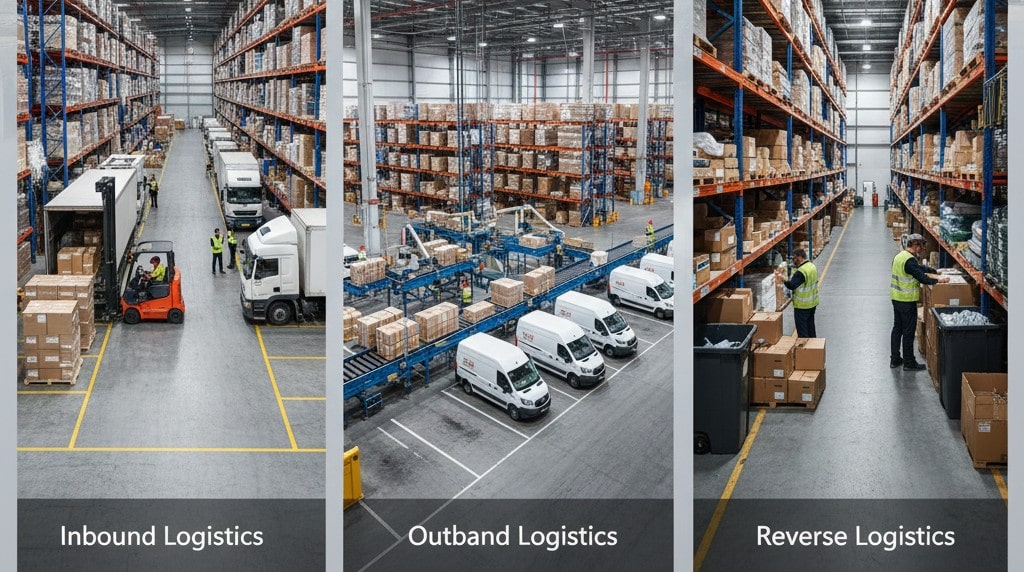
Efficient reverse logistics reduces losses and plays an important role in logistics in the retail industry, where returns, exchanges, and inventory recovery directly impact margins.
As e-commerce logistics scales toward a projected $1.9 trillion market by 2032, these components must work together seamlessly to support volume and complexity.
Inbound Logistics
Manages the flow of goods into the business, including supplier coordination, receiving, and inventory intake. Strong inbound logistics supports warehouse logistics and aligns closely with a logistics procurement strategy.
Outbound Logistics
Covers order fulfillment, packaging, and delivery to customers. Effective outbound logistics improves service levels and keeps transportation spend management under control.
Reverse Logistics
Handles returns, damaged goods, and excess inventory moving back through the supply chain. Efficient reverse logistics reduces losses and plays an important role in logistics in the retail industry.
The 5 P’s of Logistics
1. Planning
Planning sets the direction for all logistics activities. It includes demand forecasting, logistics planning, inventory positioning, and transportation coordination. With logistics representing roughly 11% of the global economy, planning mistakes can have outsized financial consequences.
2. Procurement
Procurement ensures the right suppliers and service providers are in place. A strategic logistics procurement strategy evaluates reliability, lead times, and total logistics cost, not just pricing. When procurement aligns with logistics planning, supply chains become more resilient.
3. Production
Production logistics coordinates the flow of goods through manufacturing, assembly, or fulfillment. It ensures materials are available when needed and move efficiently through warehouse logistics operations. Poor production alignment often leads to bottlenecks and fulfillment delays.
4. Packaging
Packaging protects products and improves handling efficiency. It influences transportation spend management, space utilization, and damage rates. Proper packaging also supports logistics security solutions by reducing loss and exposure.
5. People
People execute logistics strategies on a daily basis. Skilled teams ensure logistics planning and warehouse logistics processes work as intended. Training and accountability directly impact accuracy, safety, and operational performance.
What Are the Five Major Components of Logistics?
The core components of logistics work together to support efficient logistics planning and consistent execution across the supply chain.
Transportation
Moves goods between suppliers, warehouses, and customers. It plays a major role in delivery speed and transportation spend management.
Warehousing
Manages how inventory is stored and handled. Strong warehouse logistics improves accuracy, speed, and space efficiency.
Inventory Management
Controls stock levels to balance supply and demand. Poor inventory control increases costs and disrupts fulfillment.
Order Fulfillment
Covers picking, packing, and shipping customer orders. Efficient fulfillment improves service reliability and customer satisfaction.
Information Systems
Provide visibility into inventory, shipments, and performance. Accurate data supports better logistics planning and decision-making.
What Are Key Logistics KPIs?
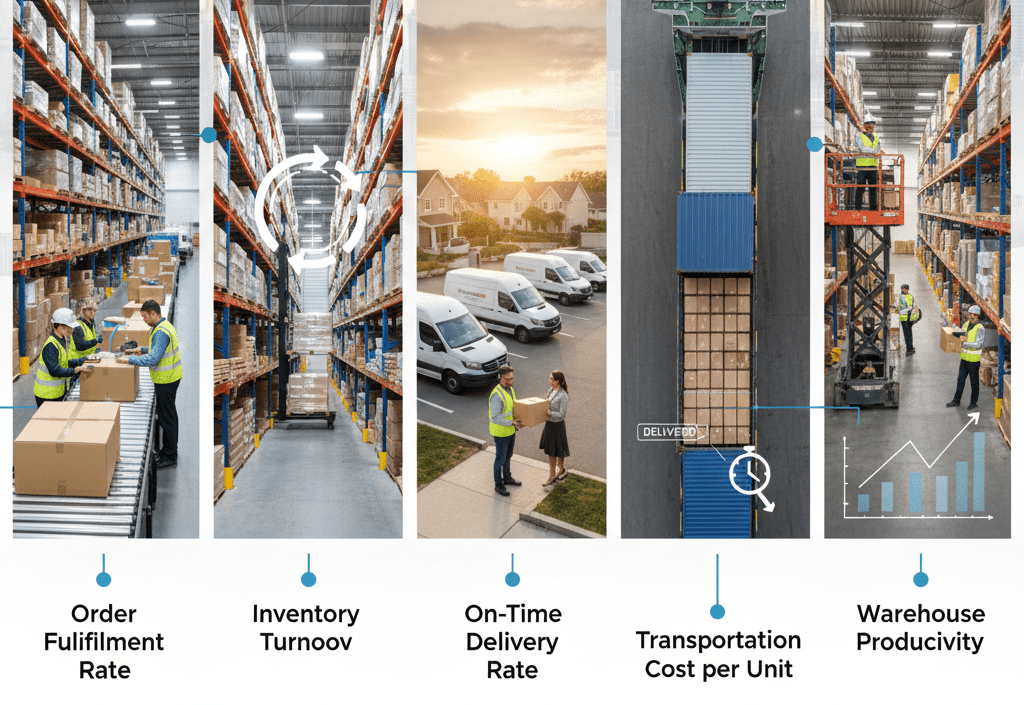
Logistics KPIs measure how well logistics operations perform and where improvements are needed.
Order Fulfillment Rate
Tracks the percentage of orders delivered accurately and on time. It reflects warehouse logistics effectiveness.
Inventory Turnover
Measures how often inventory is sold and replenished. Low turnover may indicate weak logistics planning.
On-Time Delivery Rate
Shows how consistently shipments meet delivery commitments. It directly impacts customer satisfaction.
Transportation Cost per Unit
Evaluates shipping efficiency relative to volume. This KPI supports transportation spend management.
Warehouse Productivity
Measures output per labor hour or space used. Strong productivity signals efficient warehouse logistics
Frequently Asked Questions (FAQs)
How does strong logistics planning improve profitability for businesses?
Strong logistics planning reduces wasted labor, excess inventory, and rushed transportation decisions. Over time, it creates more predictable costs and stronger margins, especially in high-volume operations
Why is warehouse logistics especially important in urban markets like NYC?
Warehouse logistics is critical in NYC because space, labor, and delivery windows are limited. Efficient warehouse logistics helps businesses move more volume without increasing overhead.
How can transportation spend management help control rising shipping costs?
Transportation spend management improves visibility into carrier performance and route efficiency. This allows businesses to reduce unnecessary fees and make data-driven shipping decisions.
When should a company invest in logistics management consulting?
Logistics management consulting is valuable when costs rise, visibility is limited, or growth outpaces internal expertise. It helps businesses identify inefficiencies and build scalable logistics strategies.
How do logistics security solutions protect supply chain operations?
Logistics security solutions reduce the risk of theft, damage, and data exposure. They also support compliance and protect customer trust across warehouse and transportation operations.
Strengthen Your Supply Chain With the 5 Principles of Logistics
The five principles of logistics provide a proven framework for building efficient, secure, and resilient supply chains.
For businesses operating in NYC and beyond, Warehouse Logistics By Best helps translate these principles into practical solutions. If your organization is ready to improve efficiency, control costs, and strengthen its supply chain, now is the time to take action.